
Look, I’ve been reviewing smartphones since the iPhone 4S was considered cutting-edge tech. Back then, we thought 512MB of RAM was plenty. Now my smartwatch has more processing power than my first laptop.
Here’s what seven years of tech blogging has taught me: smartphones aren’t just phones anymore. They’re our cameras, wallets, security systems, and sometimes the reason we miss our subway stop because we’re too busy scrolling. The mobile tech landscape changes fast, and honestly? It’s exhausting trying to keep up.
This guide isn’t going to tell you that every new phone is revolutionary. I’ve seen too many “game-changers” flop. Instead, I’ll share what actually matters when choosing, using, and getting the most out of your smartphone in 2026.
Quick Navigation:
What Makes a Smartphone Worth Your Money?
I’ll be honest. Most people don’t need the latest flagship. Last week, a friend asked if he should upgrade from his two-year-old phone. I asked what problems he was having. He said “none.” Case closed.
But if you’re actually in the market, here’s what separates decent phones from ones that’ll frustrate you daily.
Performance That Actually Lasts
Here’s the thing about smartphone performance: it’s not just about benchmark scores. I learned this the hard way when I bought a phone with a “blazing fast processor” that thermal throttled after five minutes of gaming. Not ideal when you’re in the middle of a raid.
Real performance means:
- Sustained speeds: Can it keep up after the initial burst?
- Thermal management: Does it turn into a hand warmer under load?
- RAM efficiency: 8GB sounds great until apps keep refreshing in the background
If you’re serious about understanding what makes phones fast or slow, check out our detailed guide on smartphone performance tips. Trust me, the tricks in there saved my phone from an early retirement.
Battery Life (The Real Numbers)
Every manufacturer claims “all-day battery life.” You know what that actually means? About six hours of screen-on time if you’re lucky.
I track my battery usage obsessively. Have for years. Want to know the dirty secret? Most flagship phones barely make it to dinner without a top-up. The best smartphones for battery life aren’t always the expensive ones.
My current phone? Gets me through a full day of heavy use. How? I disabled about 30 background processes that were eating power for no reason. The battery optimization game is real, and I’ve got battle scars to prove it.
Camera Quality Beyond Megapixels
Marketing teams love megapixels. “108MP camera!” they shout. Cool. My 12MP camera from three years ago still takes better photos.
Here’s what actually matters:
- Sensor size: Bigger = more light = better photos
- Image processing: This is where the magic happens
- Real-world performance: Can it handle low light without turning everything into mush?
I spent a month testing cameras for our best smartphones for photography guide. The winner wasn’t the one with the most megapixels. It was the one that consistently delivered usable photos when I needed them. At concerts. In dimly lit restaurants. During that work meeting where someone did something presentation-worthy.
Want to actually improve your photos? Skip the megapixel race and read our smartphone camera tips instead. That article has the exact settings I use.
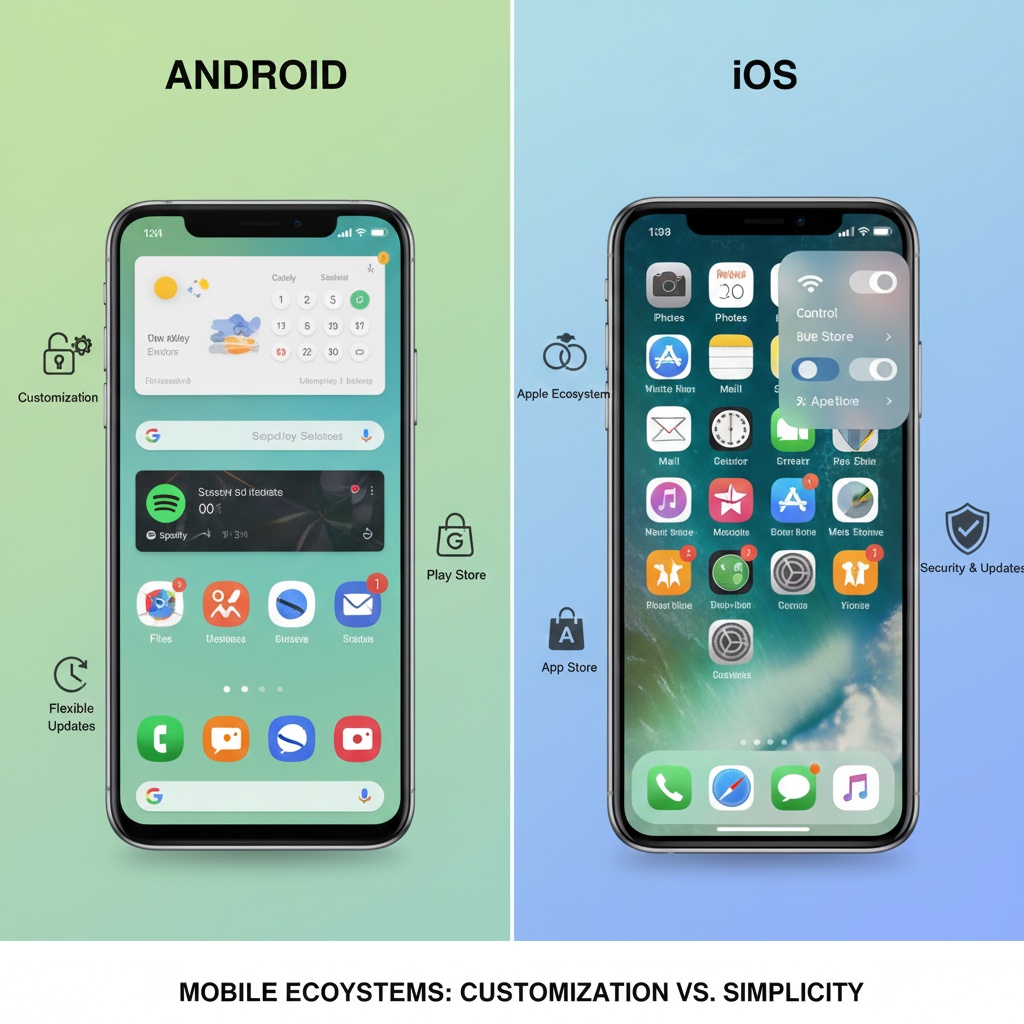
The Great Divide: Android vs iOS
This debate is exhausting. I’ve used both platforms for years, sometimes simultaneously (yes, I’m that person with two phones). Neither is objectively better. They’re just different.
Android: Freedom and Frustration
Android gives you control. Sometimes too much control. I once spent three hours customizing my home screen with widgets, icon packs, and custom gestures. It looked amazing. Then an OS update broke half of it.
What I love about Android:
- File system access (actual file management!)
- Default app choices (finally)
- Hardware variety (foldables, gaming phones, weird experiments)
- The ability to sideload apps
What drives me nuts:
- Update fragmentation (my old Android phone stopped getting updates after 18 months)
- Quality control issues (some apps just work better on iOS)
- Battery optimization that kills background tasks unpredictably
For a deeper breakdown, I wrote a whole Android vs iOS comparison after switching between them four times in two years. Yes, four times.
iOS: Smooth and Restrictive
iOS just works. Until you want to do something Apple doesn’t want you to do. Then it very much doesn’t work.
I use an iPhone as my daily driver now. Why? Because I got tired of troubleshooting. At some point, you just want your phone to be reliable. iOS delivers that, even if it means living inside Apple’s walled garden.
iOS advantages:
- Updates for 5+ years (check our smartphones with longest software support guide)
- App quality is generally better
- Integration with other Apple devices is genuinely great
- Privacy features that actually work
iOS limitations:
- No real customization
- Can’t set default apps for everything
- The Lightning port (finally changing to USB-C, but still)
- Want to root or jailbreak? Good luck keeping it stable
2026 Smartphone Landscape
The smartphone market matured. Innovation slowed down. Every new phone is “the best yet” according to its maker, but honestly? The differences are getting smaller.
Flagship Phones: Diminishing Returns
I review flagships for a living. Here’s a secret: most of them are excellent. The iPhone 15 Pro, Galaxy S24 Ultra, Pixel 9 Pro. They’re all great phones. The question isn’t “which is best?” It’s “which ecosystem do you prefer?”
Our flagship smartphone reviews break down the actual differences. Spoiler: they’re mostly minor unless you have specific needs like stylus support or computational photography.
For what’s coming next, bookmark our best smartphones of 2026 guide. I update it monthly with hands-on impressions.
Budget Phones: The Real Sweet Spot
Here’s where things get interesting. Budget phones in 2026 are better than flagships from three years ago. I’m not exaggerating.
I bought a mid-range phone last month for testing. Cost me $400. It has:
- 120Hz display (smooth as butter)
- Decent cameras (good enough for social media)
- 5000mAh battery (lasts two days)
- Clean Android with three years of updates
Could I tell the difference between this and my $1200 flagship in daily use? Sometimes. Was it worth the $800 difference? Absolutely not.
Check out best budget smartphones if you’re not convinced you need to spend flagship money. I’ve tested dozens, and some are genuinely impressive.
Foldable Phones: Cool But Compromised
I’ve used three different foldable phones. They’re amazing. They’re also frustrating.
The concept is brilliant: tablet when you need it, phone when you don’t. The reality? The screen crease is visible. The hinge collects dust. Apps don’t always play nice with the aspect ratio. Battery life takes a hit.
Are they worth it? Depends. Our foldable smartphones explained guide covers everything I wish I knew before buying my first folder. And if you do get one, you’ll need our foldable phone accessories recommendations. Trust me, the screen protector situation is complicated.
For a practical comparison, read foldable vs traditional smartphones. I still carry both because neither is perfect for everything.
Gaming on Smartphones
Mobile gaming went from Angry Birds to basically console-quality games. My phone runs Genshin Impact at high settings. My laptop from 2019 struggles with it.
If you’re serious about mobile gaming, you need specific hardware. High refresh rate displays (120Hz minimum). Good cooling systems. Lots of RAM. Responsive touch sampling rates.
I tested every major gaming phone this year for our best smartphones for gaming roundup. The specialized gaming phones have features you didn’t know you needed: shoulder buttons, cooling fans, and software that actually optimizes performance.
But here’s the catch: gaming phones usually compromise on cameras. Everything’s a tradeoff in smartphone land.
Display Technology: More Than Just Size
Screen quality matters more than most people think. I notice immediately when a display is subpar. Washed-out colors. Terrible viewing angles. Brightness that maxes out at “kinda visible in sunlight.”
The best displays in 2026:
- OLED or AMOLED: True blacks, better contrast
- 120Hz or higher: Makes everything feel smooth
- HDR support: For video watching
- High peak brightness: For outdoor visibility
Our smartphones with best displays guide includes actual nit measurements and real-world testing. Because manufacturer specs lie. A lot.
Audio Quality (Yes, It Still Matters)
Everyone uses Bluetooth headphones now. But phone audio still matters for:
- Speakerphone calls
- Videos without headphones
- That moment when your AirPods die
Good phone audio is rare. Most manufacturers focus on other specs. The smartphones with best audio quality list is surprisingly short, and yes, I tested them all with the same audio files.
Charging Speed: The Overlooked Feature
Fast charging changed everything. I remember when overnight charging was the norm. Now I can get 50% battery in 15 minutes.
But here’s what the marketing doesn’t tell you: fast charging degrades battery health faster. Every battery has a limited number of charge cycles. Constantly using the fastest charger shortens your phone’s lifespan.
For the technical details and which phones handle this best, see smartphones with fastest charging. I include the long-term battery health impact because nobody else does.
Security: Protecting Your Digital Life
I had my phone stolen in 2023. Lost years of photos because I wasn’t backing up properly. Don’t be me.
Modern smartphone security is actually pretty good. If you enable it. Most people don’t.
Essential security practices:
- Biometric authentication (face or fingerprint)
- Find My Phone enabled
- Remote wipe capability
- Regular backups (automated, not manual)
- App permissions locked down
Our comprehensive smartphone security tips guide covers everything from basic setup to advanced threat protection. I learned most of it the hard way.
Software Updates: The Silent Killer
Here’s something phone reviewers don’t talk about enough: software update policies matter more than specs.
I’ve owned phones that stopped getting security updates after one year. One year! Meanwhile, my iPhone got five years of updates. That’s a massive difference in usable lifespan.
Android’s getting better. Google promises seven years for Pixel phones now. Samsung matches that. But most manufacturers? Two years if you’re lucky.
Before buying any phone, check the smartphones with longest software support list. I update it whenever manufacturers announce new policies. This alone determines whether your phone is usable in three years.
For what’s coming in the next wave of updates, see smartphone OS updates.
Apps That Actually Matter
The smartphone is only as good as its apps. I’ve tested thousands over the years. Most are garbage.
For my current favorites across productivity, photography, security, and entertainment, check out top smartphone apps of 2026. I only include apps I actually use daily.
Accessories: What’s Worth Buying
Phone accessories are a minefield of overpriced junk. I’ve wasted hundreds on cases that cracked, chargers that failed, and screen protectors that bubbled.
What I actually use and recommend is in the smartphone accessories guide. No affiliate link nonsense. Just the stuff that survived my testing.
Use Case Specific Recommendations
Not everyone needs the same phone. Here’s how I think about recommendations:
For Students
Budget and battery life matter most. No point dropping $1200 when you need textbook money. Best smartphones for students focuses on value and longevity.
For Business Users
Security, reliability, and integration matter. If your company uses Microsoft 365 or Google Workspace, that influences which phone works best. Best smartphones for business use covers enterprise features nobody else talks about.
For Travelers
Dual SIM support, international band compatibility, and battery life are critical. I travel for work constantly, and most “flagship” phones fail basic traveler needs. Smartphones for travelers includes every gotcha I’ve encountered.
Buying Guide: Making the Right Choice
Buying a smartphone shouldn’t be this complicated. But it is. Too many options. Too much marketing. Too many specs that don’t matter.
My simple framework:
- Set a realistic budget
- Identify your must-haves (camera, battery, screen size)
- Pick an ecosystem (Android or iOS)
- Choose based on software update policy
- Ignore everything else
The full smartphone buying guide expands on this with decision trees and comparison charts. I made it because I got tired of friends asking “which phone should I buy?”
The Second-Hand Market
New phones are expensive. Used phones are risky. But the second-hand market can be great if you know what you’re doing.
I bought a refurbished flagship last year. Saved $600. Still works perfectly. But I also almost bought a blacklisted phone that would’ve been a $400 paperweight.
Everything you need to know is in refurbished and second-hand smartphones. Check IMEI numbers. Verify warranty status. Know the warning signs.
When Things Break
Phone screens shatter. It’s inevitable. I’ve cracked three phones in my career. One was entirely my fault (treadmill incident). Two were just bad luck.
Repair options depend on your phone:
- Apple: Expensive but reliable repairs
- Samsung: Getting better with authorized service
- Others: Good luck finding quality parts
The smartphone screen repair guide covers DIY repairs, third-party shops, and manufacturer repairs. Includes when it’s worth fixing versus upgrading.
Selling Your Old Phone
Eventually, you’ll upgrade. What do you do with the old one?
I’ve sold dozens of phones over the years. Learned some lessons:
- Factory reset isn’t enough (use encryption wipe)
- Original packaging helps resale value
- Timing matters (sell before new models launch)
- Some trade-in programs are ripoffs
Full process in tips for selling your smartphone, including how to get maximum value without getting scammed.
What’s Next: 2026 and Beyond
The smartphone market is maturing. We’re not seeing the huge leaps we did from 2010 to 2020. But some interesting stuff is coming.
AI features (actual useful ones, not marketing gimmicks). Better battery technology. Improved durability. Satellite connectivity for emergencies.
I’m tracking everything for smartphone trends to watch in 2026. Updates monthly as new tech gets announced.
Upcoming Releases Worth Watching
New phones launch constantly. Most aren’t worth waiting for. A few are.
I track every major announcement for the upcoming smartphone releases guide. Only includes phones that might actually matter.
The Bottom Line
After seven years of reviewing phones, here’s my honest take: most people overthink this decision.
Buy a phone that:
- Fits your budget comfortably
- Gets long software support
- Has good battery life
- Feels comfortable in your hand
Everything else is bonus features. The camera megapixels, the processor benchmarks, the AI features. They’re nice to have. They’re not make or break.
Your smartphone should make your life easier, not become a status symbol or a source of stress over whether you bought the “right” one.
Find what works for you. Use it until it doesn’t work anymore. Then upgrade. It’s not that deep.
Related Articles and Deep Dives
Want to explore specific aspects of smartphone technology? I’ve written detailed guides on every topic covered here:
Phone Selection & Buying:
- Best Smartphones of 2026
- Smartphone Buying Guide
- Best Budget Smartphones
- Flagship Smartphone Reviews
- Best Smartphones for Students
- Best Smartphones for Business Use
- Smartphones for Travelers
- Refurbished and Second-Hand Smartphones
Platform & Operating Systems:
- Android vs iOS Comparison
- Smartphone OS Updates
- Smartphones with Longest Software Support
- How to Root or Jailbreak Your Phone
Performance & Battery:
Photography & Display:
Specialized Phones:
- Best Smartphones for Gaming
- Foldable Smartphones Explained
- Foldable vs Traditional Smartphones
- Smartphones with Best Audio Quality
Security & Maintenance:
Apps & Accessories:
Future & Trends:
Each guide includes real-world testing, honest opinions, and lessons learned from years of daily use. No marketing fluff. Just what actually works.