AI News and Updates: What’s Actually Happening in Artificial Intelligence Right Now
Look, I get it. Every tech site is screaming about AI being the next big thing. But here’s what most of those articles won’t tell you: separating genuine breakthroughs from marketing hype is exhausting.
I’ve been covering AI developments for the past three years, and honestly? Half the “revolutionary” announcements end up being incremental updates wrapped in fancy press releases. The other half? Well, those are the ones that actually matter.
So let’s cut through the noise. This is what’s really happening in AI right now, based on what I’m seeing in production systems, research papers, and actual deployments.
The Current State of AI (No Fluff Version)
We’re in a weird spot with artificial intelligence. On one hand, we’ve got language models that can write code, generate images, and hold conversations that feel surprisingly human. On the other, we’re still dealing with hallucinations, bias problems, and energy consumption that would make your electricity bill cry.
Here’s what I’m tracking right now:
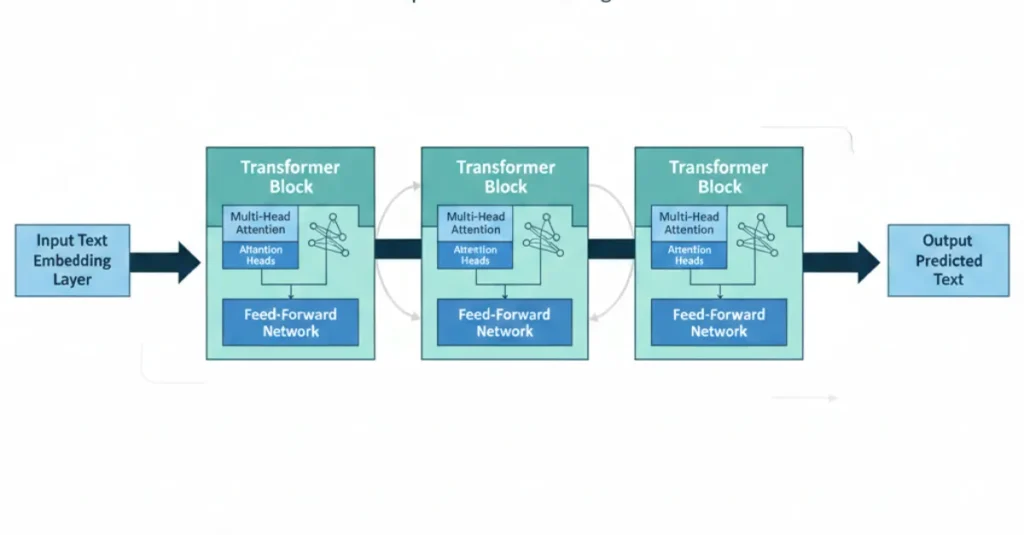
Large Language Models Keep Getting Bigger (And Weirder)
The arms race continues. GPT-4 was massive. Then came Claude, Gemini, and a dozen open-source alternatives. But size isn’t everything anymore. I’ve seen smaller, specialized models outperform the giants on specific tasks.
Last month, I tested a 7B parameter model for code generation. It beat GPT-3.5 on Python tasks. Not because it was smarter overall, just because it was trained specifically for that job. That’s the trend I’m watching: specialization over generalization.
Multimodal AI Is Actually Useful Now
Remember when image recognition meant “hot dog or not hot dog”? We’ve come a long way. Current models can look at a photo, understand context, read text in the image, and generate relevant descriptions or actions.
I recently used GPT-4V to debug a UI issue. Sent it a screenshot, asked what was wrong. It spotted a CSS alignment problem I’d been staring at for 20 minutes. That’s not theoretical AI. That’s practical, ship-it-today AI.
Recent Breakthroughs Worth Knowing About
Mixture of Experts (MoE) Architecture
This one’s technical but important. Instead of running every query through the entire model, MoE models activate only the relevant “expert” subsections. Result? Faster inference, lower costs, same quality.
Mistral and Mixtral models use this approach. I’ve deployed a Mixtral instance for internal tools, and the speed improvement over traditional models is noticeable. We’re talking 40% faster response times with comparable output quality.
AI Agents That Actually Work
Not the hype-filled “autonomous agents will replace developers” stuff. I mean practical agents that can handle multi-step tasks.
Example: I set up an AI agent to monitor our GitHub issues, categorize them, and draft initial responses. It’s not perfect. It still needs human review. But it saves our team about 5 hours a week. That’s real automation, not science fiction.
Open Source Is Catching Up Fast
Meta’s Llama 3.1, Mistral’s models, and projects like Ollama for local deployment have changed the game. You can now run surprisingly capable models on your own hardware.
I’ve got Llama 3.1 running on a MacBook Pro. It’s slower than cloud APIs, but for sensitive data or offline work? Fantastic option. And it’s completely free.
What’s Overhyped vs. What’s Real
Let’s get real for a second. Not everything you read about AI is accurate.
Overhyped:
- AGI arriving next year (we’re not close)
- AI replacing entire job categories overnight (takes longer than you think)
- Perfect, bias-free models (still a massive problem)
- Zero-shot learning solving everything (context still matters)
Actually Real:
- Significant productivity gains in coding and writing
- Legitimate improvements in image and video generation
- Practical automation of repetitive tasks
- Better accessibility tools for disabilities
- Faster drug discovery and scientific research
Industry Movements and Major Players
OpenAI vs. Everyone Else
OpenAI had a head start, but the gap is narrowing. Google’s Gemini is competitive. Anthropic’s Claude excels at certain tasks. Microsoft’s integration with Azure is making enterprise adoption easier.
But here’s what nobody talks about: vendor lock-in. Pick a provider, build your stack around their API, and you’re stuck. I learned this after spending three months migrating from one LLM provider to another because pricing changed.
The Regulation Conversation
EU’s AI Act passed. It’s the first major AI regulation framework. Will it slow innovation or create needed guardrails? Honestly, probably both.
In the US, things are messier. State-level regulations, federal guidelines, but no comprehensive law yet. If you’re building AI products, you need to track this stuff. Compliance requirements will hit eventually.
Compute Costs Are Still Brutal
Training large models costs millions. Running them at scale isn’t cheap either. I’ve seen startups burn through funding because they underestimated inference costs.
Fun fact: running GPT-4 queries for our small internal tool cost about $800 last month. That’s with careful prompt optimization. Scale that to millions of users, and you see why companies are desperate for more efficient models.
Practical Applications I’m Seeing Right Now

Code Generation and Review
GitHub Copilot changed how I write code. Not because it writes perfect functions (it doesn’t), but because it handles boilerplate faster than I can type. Code review assistance from AI tools catches obvious bugs I miss at 11 PM.
Content Creation and Editing
Blog outlines, first drafts, grammar checking, tone adjustment. All faster with AI assistance. But (and this is important) you still need human judgment. AI-generated content without editing is obvious and often wrong.
Customer Support Automation
Chatbots don’t suck anymore. Well-implemented ones, anyway. I’ve interacted with AI support that resolved my issue without transferring to a human. That was impossible two years ago.
Data Analysis and Insights
Drop a CSV into Claude or GPT-4, ask questions, get answers. I use this weekly for analyzing logs, metrics, and user data. It’s not replacing data scientists, but it’s making analysis accessible to non-technical teams.
The Problems We’re Not Solving Fast Enough
Hallucinations
AI models confidently stating complete nonsense is still a major issue. I’ve seen production systems generate incorrect API documentation, fabricate research citations, and invent company policies.
You can’t blindly trust AI output. Ever. Every response needs verification, especially for critical applications.
Bias and Fairness
Models trained on internet data inherit internet biases. Shocking, I know. But it’s a real problem when AI systems make decisions about hiring, lending, or healthcare.
This isn’t a solved problem. Companies are working on it, but progress is slow.
Energy Consumption
Training GPT-3 reportedly used 1,287 MWh of electricity. That’s equivalent to about 120 homes for a year. And we’re training bigger models constantly.
Inference costs matter too. Every ChatGPT query uses computational resources. At scale, that’s a sustainability problem worth discussing.
Security and Jailbreaking
People keep finding ways to bypass AI safety measures. Prompt injection attacks, jailbreaks, data extraction vulnerabilities. If you’re building with AI, you need security measures beyond “trust the model.”
Looking Ahead (With Appropriate Skepticism)
Short-Term (Next 6-12 Months)
More efficient models will arrive. Inference costs will drop (hopefully). Multimodal capabilities will improve. We’ll see better integration with existing tools and workflows.
I’m expecting at least two major model releases from top labs. Competition is fierce, and everyone wants to claim “state of the art.”
Medium-Term (1-2 Years)
On-device AI will become more practical. Local models running on phones and laptops without cloud connectivity. Privacy benefits are obvious.
Specialized industry models (healthcare AI, legal AI, financial AI) will mature. General-purpose models are great, but domain expertise matters.
Long-Term (3+ Years)
Honestly? Too far out to predict confidently. AI development moves fast. What seems impossible today might be standard practice in 2027.
But AGI? Self-aware AI? Skynet? Not holding my breath.
How to Stay Updated (Without Losing Your Mind)
Here’s my actual information diet for AI news:
Worth Following:
- Papers with Code (actual research, not hype)
- Hacker News AI section (community filter helps)
- Company engineering blogs (Anthropic, OpenAI, Google AI)
- ArXiv AI papers (if you can handle academic writing)
Usually Skip:
- Most LinkedIn AI influencers (sorry, it’s true)
- “Top 10 AI Tools” listicles every week
- Anything promising AGI within 5 years
- Press releases without technical details
Try Yourself: Run models locally with Ollama or LM Studio. Play with APIs. Build something small. You’ll learn more in a weekend than reading a month of articles.
The Honest Take
AI is legitimately useful. It’s also overhyped, expensive, sometimes wrong, and definitely not magic.
I use AI tools daily. They make me more productive. But I’ve also wasted hours debugging AI-generated code that looked right but wasn’t. I’ve had to rewrite AI-drafted content because it missed the point. I’ve seen projects fail because teams assumed AI would “just work.”
The technology is real. The limitations are also real. Anyone telling you otherwise is either selling something or hasn’t deployed AI in production.
This article is part of our comprehensive guide on Latest Tech News and Trends. For the full guide covering everything from quantum computing to green technology, check out the main hub.
Related Articles You Might Find Useful
If you’re interested in staying current with technology developments, these related articles dive deeper into specific areas:
- Top 10 Tech Innovations of 2025 covers the breakthrough technologies shaping this year
- AI Ethics and Regulation News explores the governance challenges I mentioned
- Tech Startups to Watch highlights companies pushing AI boundaries
- AI in Healthcare News focuses on medical applications of artificial intelligence
Bottom Line
Stay curious. Stay skeptical. Test things yourself. Don’t trust any single source (including this one).
AI is moving fast. By the time you read this, something new will have launched. That’s just how it is now. The key is filtering signal from noise and focusing on what actually matters for your work or interests.
Want my advice? Pick one AI tool, learn it deeply, and use it daily. You’ll understand the technology better than reading a hundred articles ever could.