Gaming Industry News: What’s Actually Happening in Gaming Right Now
Look, I’ve been covering tech for seven years, and gaming news moves faster than any other sector I track. One week you’re writing about a new console announcement, the next week that same company is buying a studio for billions. It’s exhausting and fascinating in equal measure.
So here’s what’s actually going on in gaming right now. No fluff, just the stuff that matters if you’re actually paying attention to where this industry is headed.
The Console Wars Are Getting Weird
Remember when console generations were simple? New hardware every 5-7 years, clear upgrades, everyone knew where they stood. Yeah, that’s over.
Microsoft’s playing a completely different game now. They’ve basically admitted the Xbox Series X/S isn’t about selling boxes anymore. It’s about Game Pass subscriptions. I talked to a friend who works at a game studio last month, and he said their entire business model discussion now starts with “okay, but what’s the Game Pass deal look like?”
Sony’s still pushing hardware hard with the PS5, but even they’re starting to port exclusives to PC. Spider-Man 2 will hit Steam eventually. We all know it.
And Nintendo? They’re just doing Nintendo things. The Switch is eight years old and still printing money. The rumored Switch 2 (or whatever they’ll call it) keeps getting delayed, but honestly, they don’t seem to care. Why would they? They sold 140 million Switches.

What This Actually Means
Here’s the thing nobody wants to say out loud: console exclusives are dying. Not dead yet, but definitely on life support. The economics don’t work anymore when you can spend $200 million on a game and only sell it to one platform’s audience.
I’ve watched this shift happen in real time. Three years ago, exclusives were the main selling point. Now? Most gamers I know just wait for the PC port.
eSports Is Having an Identity Crisis
Real talk: eSports had a moment, and that moment might be passing.
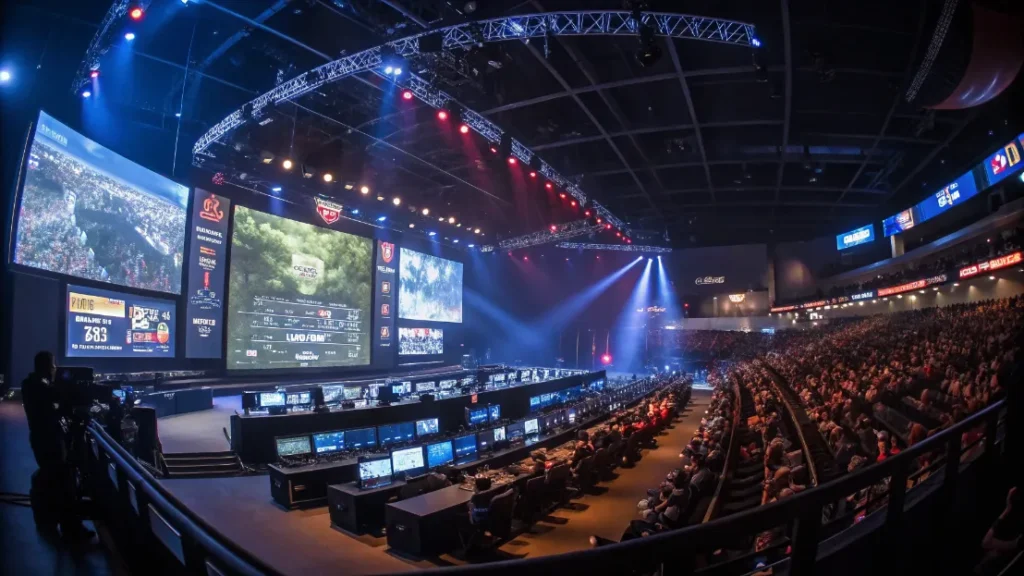
Don’t get me wrong. The top-tier tournaments are still huge. The League of Legends World Championship pulled over 6 million concurrent viewers last year. That’s not nothing. But here’s what changed: the money’s drying up.
FTX was sponsoring everything in eSports until, well, FTX stopped existing. Crypto sponsors vanished overnight. And traditional sports organizations that bought into eSports teams (looking at you, NBA franchises) are quietly selling them off or shutting them down.
I covered an eSports event in 2021 that had RGB everything, massive prize pools, and felt like the future. Same event in 2024? Scaled way back. Smaller venue. Less production. Still good games, but you could feel the difference.
The Streaming Problem
Twitch and YouTube created this whole ecosystem where anyone could build an audience playing games. That’s great until everyone realizes there are millions of streamers and only a few thousand can actually make rent doing it.
The gold rush is over. Now it’s just… a job. A tough job where you’re competing with every other person who owns a webcam and plays Valorant.
Mobile Gaming Is Where the Actual Money Is
Here’s a stat that’ll hurt: mobile gaming revenue is bigger than console and PC gaming combined. By a lot. We’re talking $100+ billion annually.
I know, I know. Mobile games are “casual” or whatever gatekeeping nonsense people say. But Genshin Impact made $4 billion. PUBG Mobile has 30 million daily players. These aren’t small numbers.
And the tech is getting ridiculous. The iPhone 16 Pro can run games that would’ve needed a gaming PC five years ago. Same with flagship Android phones. The gap between mobile and “real” gaming is shrinking fast.
The Gacha Problem
But here’s where it gets messy. Mobile gaming’s success is built on some pretty questionable monetization. Gacha mechanics, loot boxes, battle passes that require dozens of hours to complete. It works. People spend money. But it feels gross sometimes.
I downloaded a mobile game last week that hit me with five different currency types in the tutorial. Five. At that point you’re not playing a game, you’re navigating a monetization maze.
Game Development Is Broken Right Now
Let’s talk about the elephant in the room: game studios are laying off thousands of people while reporting record profits.
Unity laid off 1,800 employees in 2024. Epic Games cut 830 jobs. Microsoft shut down multiple studios right after buying Activision Blizzard for $69 billion. EA, Riot, Bungie, the list goes on.
Here’s what’s happening: games cost too much to make, take too long to ship, and need to be massive hits to break even. There’s no middle tier anymore. You’re either an indie game made by five people or a AAA blockbuster with a $300 million budget. Nothing in between survives.
I know developers who’ve worked on three cancelled games in a row. Three. Years of work, just gone because some executive decided the market had shifted.
The Live Service Trap
Studios looked at Fortnite and Destiny 2 printing money and thought “we need that.” So now every major publisher wants a live service game. Problem? Most of them fail within a year.
Anthem. Babylon’s Fall. Hyper Scape. Knockout City. Crucible (shut down after five months). The list of dead live service games is longer than the list of successful ones.
But studios keep trying because the successful ones are just too profitable to ignore. It’s like watching someone play slots, except the slots cost $200 million to pull the lever.
What’s Actually Exciting Right Now
Okay, enough doom and gloom. There’s cool stuff happening too.
Indie games are thriving. Hades sold millions of copies. Stray became a cultural phenomenon with a cat protagonist. Vampire Survivors was made by one person and became one of the biggest games of 2022. The tools are good enough now that small teams can compete.
Cloud gaming finally works. I tested GeForce Now last month on a crappy laptop, and it was… fine? Not perfect, but playable. Five years ago, that would’ve been impossible.
Cross-platform play is standard now. Remember when PlayStation and Xbox players couldn’t game together? That barrier’s mostly gone. It’s nice when things just work.
VR is finding its niche. The Meta Quest 3 is actually good. Not “future of gaming” good, but “fun weekend gaming” good. And that’s enough.
Industry Trends You’ll See More Of
Based on what I’m seeing (and hearing from people who actually work in gaming):
More remakes and remasters. Original IP is risky. Remaking Final Fantasy VII? That’s a sure thing. Expect this trend to accelerate.
Subscription fatigue will hit gaming. Game Pass, PlayStation Plus, Nintendo Online, EA Play, Ubisoft+. At some point, people will have subscription exhaustion. We’re not there yet, but it’s coming.
AI-generated content will show up everywhere. Studios are already using AI for texture generation, dialogue, and game testing. Whether that’s good or bad depends on who you ask, but it’s definitely happening.
Regulatory pressure on loot boxes. Multiple countries are cracking down. The EU is watching closely. This could fundamentally change how games monetize.
The Stuff Nobody Talks About
Here are some trends that don’t make headlines but matter:
Digital-only is winning. The PS5 Digital Edition outsells the disc version. Most PC gamers haven’t bought a physical game in years. GameStop’s death was inevitable.
Preservation is getting worse. When servers shut down, games disappear. We’re going to lose more gaming history in the next decade than we did in the previous fifty years combined.
Accessibility is finally improving. More games support colorblind modes, remappable controls, and difficulty options. It’s about time.
Regional pricing is a mess. A game costs $70 in the US but equivalent to $20 in some markets. Publishers are still figuring out how to handle this without getting arbitraged.
Where This Is All Headed
If I had to bet on the next five years? Here’s my guess:
Game Pass or something like it becomes the primary way people play games. Physical media becomes niche. Cloud gaming fills the “I want to play but don’t want to buy hardware” market. Mobile and PC continue to eat console’s lunch.
Studios consolidate even more. Microsoft, Sony, Tencent, and a few others will own most major franchises. Indies will continue to surprise us with creative stuff the big studios won’t risk.
And we’ll keep having the same arguments about graphics vs. gameplay, about exclusives, about what makes a game “real.” Because gamers never change, even when everything else does.
Why You Should Care
Gaming’s bigger than movies and music combined now. It’s not a hobby anymore. It’s a massive industry that influences culture, drives hardware innovation, and shapes how millions of people spend their free time.
The decisions made in boardrooms in Tokyo, Redmond, and Shenzhen affect whether your favorite game gets a sequel, whether you can play with friends on different platforms, and whether that small studio making something cool can stay in business.
So yeah, gaming industry news matters. Even if half of it is just companies buying other companies and shutting down studios. That’s the reality we’re in.
Related Gaming Content
This article is part of our comprehensive guide on Latest Tech News and Trends. For more tech industry coverage and insights, check out the full guide.
Want more specific gaming insights? Check out these related articles:
- Tech Product Launches – Latest gaming hardware and console releases
- AI News and Updates – How AI is changing game development
- Tech Startups to Watch – Indie studios and new gaming companies
- VR and AR Industry News – Virtual reality gaming developments
Final Thoughts
I’ll keep updating this as major news breaks. Gaming moves fast. Bookmark this if you want to stay current without drowning in press releases and marketing spin.
And if you work in gaming and I got something wrong, let me know. I’m not perfect. Just trying to make sense of an industry that changes faster than I can type.