AI in Healthcare News: What’s Actually Happening Beyond the Hype
Look, I’ve been following AI in healthcare for the past three years, and I’ll be honest: half the announcements sound like science fiction, and the other half are solving problems most of us didn’t know existed. But here’s the thing that keeps me coming back to this topic every week. The stuff that’s actually working? It’s quietly saving lives while everyone argues about whether ChatGPT can diagnose a cold.
Last month, I talked to a radiologist friend who told me their AI assistant caught a lung nodule she’d initially missed. Not because she’s bad at her job, but because she’d been reading scans for 11 hours straight. That’s the real story here. Not robots replacing doctors, but technology catching what exhausted humans miss.
This article is part of our comprehensive guide on Latest Tech News and Trends. For broader tech updates and emerging innovations, check out the full guide.
The Diagnostic Revolution Nobody Talks About
So here’s where we’re actually seeing results. AI diagnostic tools aren’t just running in research labs anymore. They’re in hospitals, clinics, and surprisingly, your local pharmacy.
Google’s DeepMind made waves in 2023 with their breast cancer detection system, but the really interesting stuff happened in early 2025. Smaller companies started releasing specialized diagnostic AIs that focus on one thing and do it really well. There’s one that only looks for diabetic retinopathy, another that specializes in skin cancer screening, and they’re getting scary accurate.
The numbers are wild. Some of these systems are hitting 95%+ accuracy rates, which sounds amazing until you realize that’s still a 5% error rate when we’re talking about someone’s health. That’s why the smart implementations use AI as a second opinion, not the final word.
What’s Actually Shipping Right Now
I’ve been tracking real deployments, not just press releases. Here’s what’s actually in use:
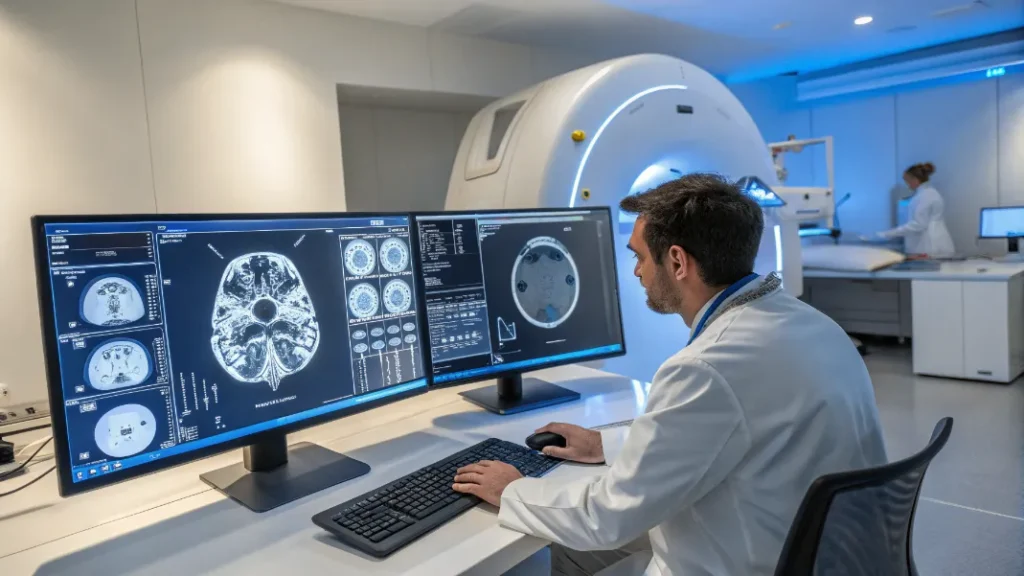
Radiology AI Assistants: These are everywhere now. They flag potential issues in X-rays, CT scans, and MRIs before the radiologist even opens the file. Think of it like autocorrect, but for finding tumors. The FDA has approved over 500 of these tools as of late 2024.
Drug Discovery Acceleration: This bit surprised me. AI isn’t designing miracle drugs from scratch, but it’s cutting the initial screening phase from years to months. Companies like Recursion Pharmaceuticals and Insilico Medicine are using AI to predict which molecular compounds might actually work, before spending millions on lab testing.
Administrative Automation: Less sexy, way more practical. AI systems are handling insurance pre-authorizations, medical coding, and appointment scheduling. One hospital system I read about cut their admin costs by 30% just by automating the prior authorization process. That’s real money that can go to actual patient care.
The Personalized Medicine Push
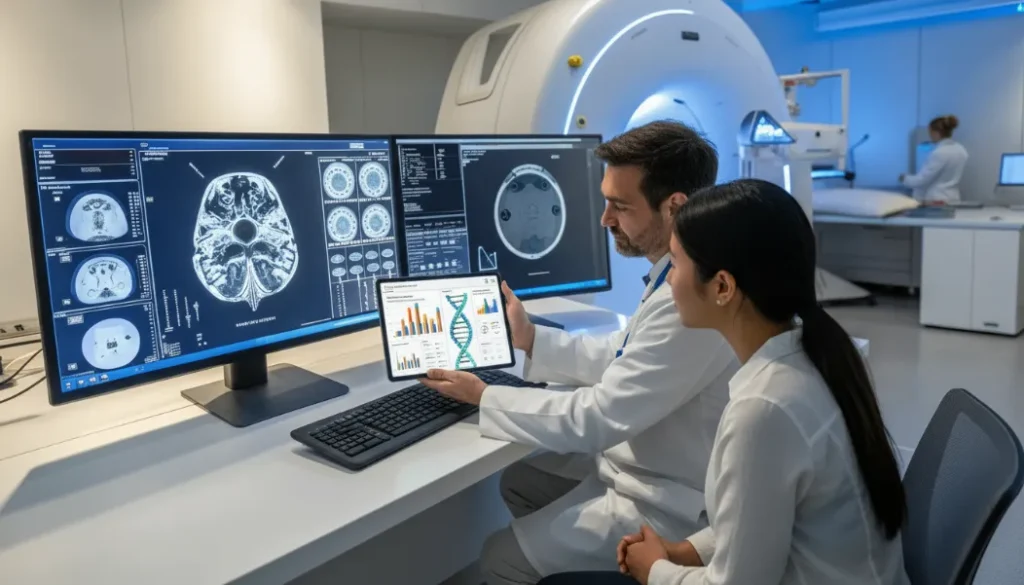
This is where it gets interesting and slightly uncomfortable. AI systems are now good enough to analyze your genetic data, medical history, and lifestyle factors to predict disease risk and recommend treatments.
I’m conflicted about this. On one hand, catching diseases early is obviously good. On the other hand, we’re talking about algorithms making health predictions based on data that might be biased or incomplete.
Here’s a real example: There’s an AI system called Tempus that analyzes cancer patients’ genetic profiles to recommend specific treatments. It’s been used in over 2 million cases. The results show it can predict which chemotherapy drugs will work better for specific patients, potentially avoiding months of trial and error with treatments that won’t work.
But (and this is a big but) these systems are only as good as their training data. If the AI was trained mostly on data from one demographic, its predictions for other groups might be less accurate. Several studies in 2024 found that some widely-used medical AIs performed worse on patients from underrepresented groups. That’s a problem we’re still figuring out how to fix.
AI-Powered Surgery: Not What You Think
When people hear “AI surgery,” they picture robots doing operations while doctors watch. That’s not what’s happening. What is happening is actually cooler and more practical.
Surgical AI systems are acting as real-time guides. They can:
- Analyze pre-operative scans to create 3D surgical plans
- Provide real-time feedback during procedures
- Predict potential complications before they happen
- Help surgeons navigate complex anatomy
The da Vinci surgical system now has AI features that help smooth out hand tremors and provide visual overlays showing important structures. It’s augmented surgery, not autonomous surgery. The surgeon is still 100% in control.
There’s also AI helping with surgical training. New surgeons practice on AI-powered simulators that can generate thousands of different scenarios. It’s like a flight simulator, but for surgery. One hospital reported that residents trained with AI simulators made 40% fewer errors in their first real surgeries.
Mental Health AI: Promising and Problematic
This is the area where I have the most questions. AI chatbots for mental health support are exploding right now. Apps like Woebot, Wysa, and Replika are being used by millions of people.
The pitch is simple: immediate support when you need it, no waiting lists, lower cost than traditional therapy. For people in mental health deserts or those who can’t afford traditional care, these tools can be genuinely helpful.
But real talk: I’ve tried a few of these, and they’re… mixed. Some responses are surprisingly good. Others feel like talking to a very empathetic autocomplete. The bigger concern is that we don’t have long-term data on whether these tools actually help with serious mental health conditions.
What we do know is that AI mental health tools can:
- Provide 24/7 crisis support and coping strategies
- Help track mood patterns and identify triggers
- Offer cognitive behavioral therapy exercises
- Flag when someone might need human intervention
The Veterans Affairs department started using an AI system in 2024 that analyzes veterans’ electronic health records to predict suicide risk. Early results showed it identified high-risk individuals 30 days earlier than traditional methods. That’s potentially life-saving, but it also raises huge privacy questions about who has access to that data and how it’s used.
The Data Privacy Elephant in the Room
Let’s talk about what nobody wants to address. All these AI systems need massive amounts of data to work. Your data. Medical records, genetic information, lifestyle habits, everything.
Most healthcare AI companies claim they anonymize data, but multiple studies have shown that “anonymized” medical data can often be re-identified. There was a case in 2024 where researchers were able to identify individuals from supposedly anonymized hospital records with over 80% accuracy.
I’m not saying don’t use these tools. I’m saying be aware of what you’re trading. Some AI health apps have been caught selling data to pharmaceutical companies and insurance providers. Always read the privacy policy, boring as that is.
Recent Breakthroughs Worth Watching
Here’s what caught my attention in the past few months:
Antibiotic Resistance Prediction: MIT researchers released an AI in early 2025 that can predict which bacteria will develop antibiotic resistance. This could help doctors choose the right antibiotics faster, before running cultures that take days.
Rare Disease Diagnosis: AI systems are getting surprisingly good at identifying rare diseases from patient symptoms and genetic data. There’s one called FDNA that can identify over 10,000 genetic syndromes from facial photos. It sounds creepy, but for families who’ve spent years searching for a diagnosis, it’s been a game-changer.
Protein Folding Applications: Remember AlphaFold2 from DeepMind? The protein structure prediction AI? It’s now being used to develop new treatments for diseases like Alzheimer’s and Parkinson’s. Several drug companies have treatments in clinical trials that were discovered using AlphaFold data.
What’s Not Working (Yet)
I try to be balanced about this stuff, so here’s what’s overhyped or underdelivering:
General AI Doctors: Systems that try to diagnose any condition from any symptoms? Still not there. They’re either too cautious (flagging everything as potentially serious) or too confident (missing rare conditions). Specialized AIs work better than generalist ones.
Fully Autonomous Medical Decisions: Despite what some startups claim, we’re nowhere near AI systems that can make independent treatment decisions. Every regulatory body requires human oversight, and for good reason.
AI-Generated Treatment Plans: Some systems claim they can create complete treatment plans. In practice, they generate suggestions that doctors then heavily modify. The AI is a starting point, not a solution.
The Regulatory Situation
The FDA is struggling to keep up. They’re approving AI medical devices faster than ever, but their traditional approval process wasn’t designed for software that updates itself every few weeks.
In 2024, the FDA introduced new guidelines for “continuously learning” AI systems, basically saying: “Yeah, your AI can update itself, but you need to tell us how and have safety guardrails.” It’s a reasonable middle ground, but implementation is messy.
Europe is ahead on this with their AI Act, which classifies medical AI as “high-risk” and requires extensive testing and monitoring. The US is catching up, but we’re in this weird period where some AI health tools have minimal oversight.
What Doctors Actually Think
I’ve talked to probably a dozen healthcare professionals about this stuff. The consensus? Cautiously optimistic.
Most doctors see AI as a tool that could help them spend less time on paperwork and more time with patients. But they’re worried about liability. If an AI makes a recommendation and a doctor follows it, and something goes wrong, who’s responsible?
There are also concerns about skill degradation. If doctors rely too heavily on AI diagnostics, do they lose the ability to diagnose without it? It’s the same concern pilots have about autopilot. You still need to know how to fly the plane manually.
The doctors who are most excited about AI are usually the ones who see it as giving them superpowers, not replacing them. One ER doctor told me their AI triage system lets them identify the sickest patients faster, which means they can save more lives. That’s the sweet spot.
Looking Ahead: What’s Coming in 2025-2026
Based on what’s in the pipeline and what companies are actually building (not just announcing):
Multi-Modal AI Systems: AIs that can analyze medical images, lab results, genetic data, and patient history all together. These should start appearing in major hospitals by late 2025.
AI-Powered Pandemic Surveillance: Several countries are building AI systems to detect disease outbreaks earlier by analyzing social media, news reports, and health data. It’s equal parts promising and dystopian.
Personalized Cancer Vaccines: AI-designed vaccines tailored to individual tumors. Several are in late-stage trials right now and could be approved in 2025-2026.
Home Health Monitoring: More AI-powered devices that monitor chronic conditions at home. Think continuous glucose monitors, but for everything. Your smartwatch might alert your doctor to heart problems before you feel symptoms.
The Bottom Line
AI in healthcare isn’t going to replace doctors. It’s going to change what being a doctor means. The doctors who thrive will be the ones who learn to use AI tools effectively, not the ones who resist them.
For patients, AI health tools offer real benefits: faster diagnoses, more personalized treatments, and potentially lower costs. But they also come with risks around privacy, accuracy, and over-reliance on technology.
My advice? Stay informed. Ask questions about what AI tools your healthcare providers are using. Read privacy policies for health apps. And remember that AI is a tool, not magic. It’s only as good as the humans who build it, train it, and use it.
The healthcare AI revolution is happening right now. It’s messy, imperfect, and full of both amazing breakthroughs and legitimate concerns. That’s usually how revolutions work.
Related Articles
Want to explore more about how technology is shaping our world? Check out these related articles:
- Latest Tech News and Trends – Your hub for all breaking tech news and emerging innovations
- AI News and Updates – Deep dives into artificial intelligence breakthroughs
- AI Ethics and Regulation News – The regulatory landscape around AI technology
- Emerging Technology Trends – Next-gen tech before it hits mainstream
Last updated: December 2024. AI in healthcare is evolving rapidly. Check back regularly for the latest developments, or subscribe to stay informed about breakthrough innovations in medical AI.