Ethical Issues in AI: What Nobody Tells You Until It’s Too Late
I shipped an AI recommendation system two years ago. Felt pretty good about it too. Three months later, we noticed something weird: the algorithm kept suggesting premium products to users from wealthier zip codes and budget options to everyone else.
We didn’t program that. Nobody sat down and said, “Let’s make this classist.” But there it was, learning patterns from our historical data and amplifying existing biases. Welcome to AI ethics, where good intentions meet messy reality.
If you’re building anything with AI or machine learning, you need to think about this stuff now. Not later. Now.
This article is part of our comprehensive guide on Artificial Intelligence and Machine Learning. For the full overview of AI concepts and applications, check out the main guide.
The Bias Problem Nobody Wants to Talk About
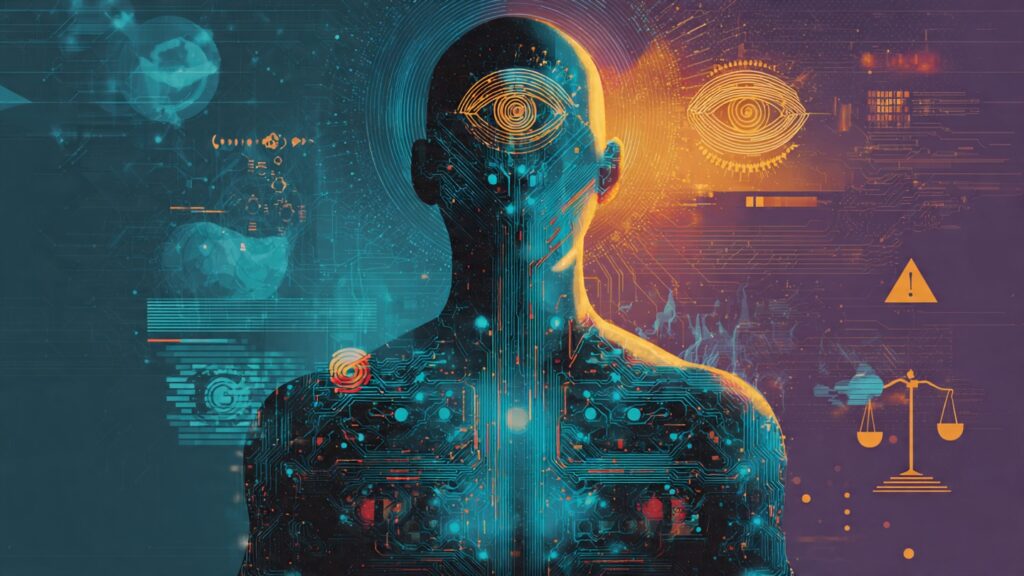
Here’s what actually happens with AI bias. You train your model on real-world data. That data reflects real-world problems: historical discrimination, uneven representation, systemic inequalities. Your model learns those patterns because, well, that’s what it’s supposed to do. Learn patterns.
I’ve seen this play out in hiring algorithms. A company I consulted for built a resume screening tool trained on 10 years of successful hires. Sounds reasonable, right? Except their previous hiring had been 75% male in technical roles. The AI learned that male candidates were “better fits.” Not because it was sexist. Because the data was.
Common sources of bias include:
Training data that underrepresents certain groups. If your dataset has 90% of one demographic, your model will perform worse on the other 10%.
Historical patterns baked into data. Past decisions, even biased ones, become the foundation for future predictions.
Feedback loops that amplify initial biases. The model makes biased predictions, those predictions generate new data, and the cycle continues.
You can’t just “fix” this with better algorithms. I’ve tried. The problem isn’t the math. It’s the world the math is learning from.
Privacy: The Invisible Trade-Off
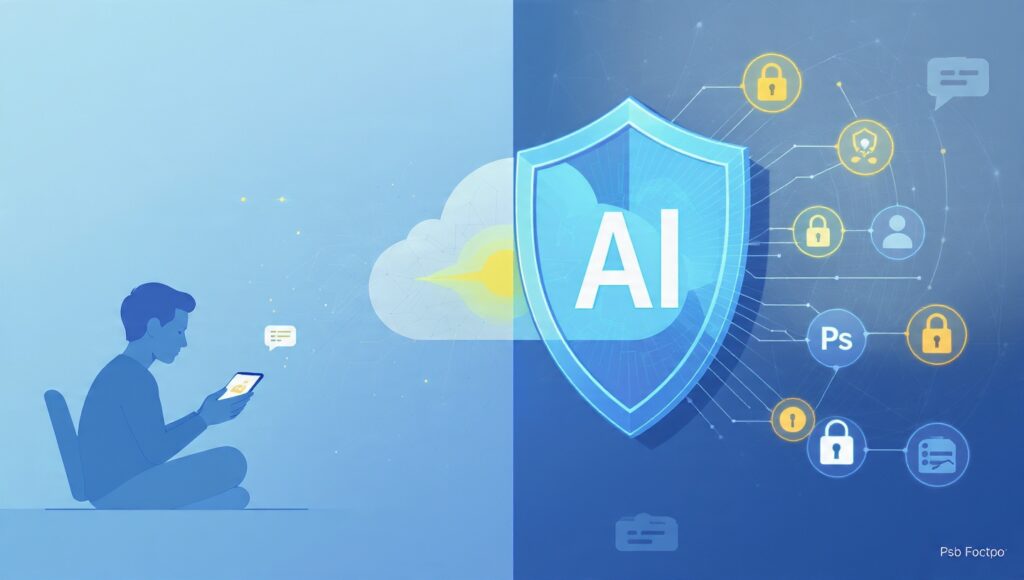
Let’s talk about what AI systems actually need to work well. Data. Lots of it. Personal data. Behavioral data. Data you probably don’t realize you’re sharing.
I built a chatbot last year that needed conversation history to provide context-aware responses. Basic stuff. But to make it work, we had to store every message, every interaction, every question users asked. Some of those questions were sensitive. Medical concerns. Financial worries. Relationship problems.
We had encryption. We had access controls. We followed GDPR. But here’s the uncomfortable truth: that data existed. And data that exists can be breached, subpoenaed, or misused.
The privacy concerns stack up fast:
- Data collection scope: AI systems often need more data than traditional software. Sometimes way more.
- Data retention: Machine learning models need historical data for training and improvement.
- Third-party sharing: Cloud AI services mean your data lives on someone else’s servers.
- Anonymization limitations: Supposedly anonymous data can often be re-identified with enough cross-referencing.
There’s no perfect solution here. You balance functionality against privacy. Every single time. And sometimes, honestly, the trade-off isn’t worth it.
If you’re curious about how AI development handles these challenges from a technical perspective, our guide on AI Algorithms explores the mechanics behind these systems.
The Black Box Problem
You know what’s worse than an AI making a bad decision? An AI making a bad decision that nobody can explain.
I’ve had to tell stakeholders, “The model says this loan application should be rejected, but I can’t tell you exactly why.” Deep learning models, especially, are like this. They work. They work really well sometimes. But explaining their reasoning? That’s hard.
This matters more than you think. When an AI denies someone a loan, or flags them for additional security screening, or decides they’re not qualified for a job, people deserve to know why. “The algorithm said so” isn’t an answer.
Some jurisdictions are starting to require explainability. The EU’s GDPR includes a “right to explanation” for automated decisions. But here’s the thing: many modern AI systems are fundamentally hard to explain. It’s not about being secretive. It’s about the mathematical complexity of neural networks with millions of parameters.
Decision-Making Authority: Where Do Humans Fit?
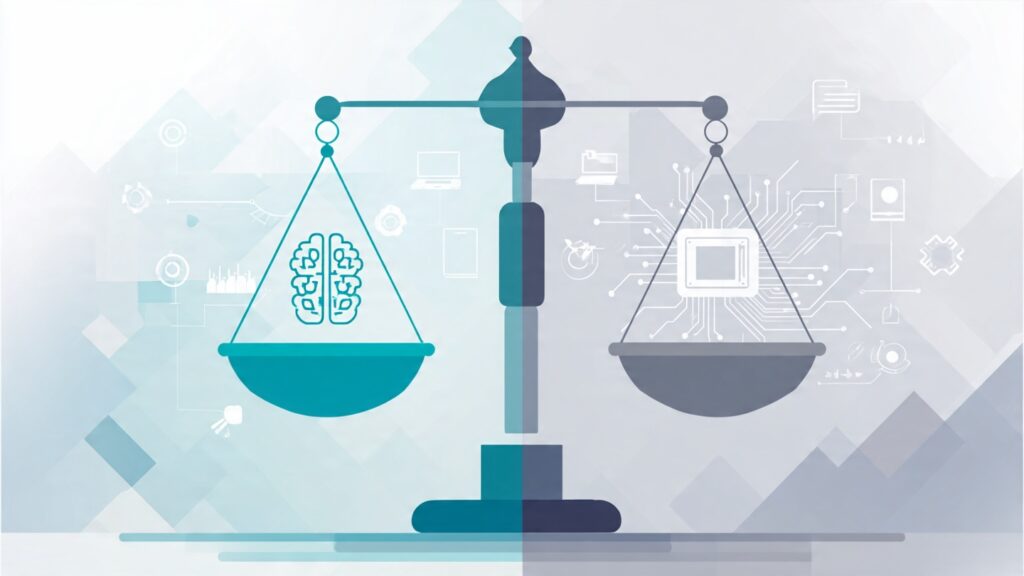
Here’s a question that keeps me up sometimes: should AI systems make decisions, or should they advise humans who make decisions?
I’ve seen both approaches fail. Humans ignore AI recommendations even when they’re right (because we don’t trust machines). AI systems make autonomous decisions that go horribly wrong (because they lack human judgment).
A healthcare AI I worked with could predict patient deterioration with impressive accuracy. But we never let it automatically adjust treatment. Too risky. Instead, it flagged cases for human review. Sometimes doctors overruled it. Sometimes they followed it. The system was never in charge.
Compare that to content moderation AI on social platforms. Often running with minimal human oversight, making thousands of decisions per second. Some correct. Some very much not. And when it messes up, there’s usually no easy appeal process.
The question isn’t “is AI better than humans?” It’s “where’s the right balance, and how do we maintain meaningful human control?”
For a broader look at how AI is being applied across different sectors, check out Introduction to Artificial Intelligence.
Accountability: Who’s Responsible When AI Screws Up?
This one’s tricky. An autonomous vehicle hits a pedestrian. Who’s liable? The car manufacturer? The AI training team? The software developer? The company that deployed it? The person in the driver’s seat?
We don’t have clear answers yet. Legal frameworks are playing catch-up with technology.
I’ve been in meetings where legal teams argue about liability for hours. If our recommendation algorithm causes financial loss, are we responsible? What if the user misinterpreted the recommendation? What if there was a bug in the training data? What if the model just made a statistically unlikely prediction?
The accountability gap includes:
- Distributed responsibility across multiple parties
- Difficulty proving causation in complex systems
- Lack of clear regulatory frameworks
- Insurance and liability structures that don’t account for AI
- International differences in legal standards
Right now, we’re mostly operating in a gray area. Companies set internal policies. Industry groups publish guidelines. But enforceable accountability? Still evolving.
The Consent Problem
Did you agree to have your face scanned by that store’s security system? Did you consent to having your writing style analyzed to detect if you’re a security risk? Did you opt into predictive policing algorithms using your neighborhood’s data?
Probably not explicitly. Maybe not at all.
Consent in AI is complicated because the use cases aren’t always obvious upfront. Data collected for one purpose gets repurposed for another. Systems evolve. New capabilities emerge. And suddenly your data is being used in ways you never imagined.
I’ve worked on projects where we had consent for data collection but not really for how we ended up using it. Technically legal. Ethically questionable.
Environmental Cost: The Invisible Impact
Here’s something most AI ethics discussions skip: the environmental impact of training large models.
Training GPT-3 reportedly produced about 552 tons of CO2. That’s equivalent to driving 1.2 million miles. And that’s just one model, one time. Every iteration, every competitor, every improvement adds more.
I ran some experiments with computer vision models last year. The electric bill was noticeable. The carbon footprint was real. And I was just one person, training relatively small models.
As AI scales, this matters. Especially when we’re trying to address climate change while building energy-intensive AI systems. The irony isn’t lost on me.
Regulation and Oversight: Who Watches the Watchers?
Some people think AI needs strict regulation. Others think regulation will kill innovation. I think both are kind of right.
Without oversight, we get problematic deployments, unchecked biases, and privacy violations. But heavy-handed regulation can prevent legitimate innovation and push development into less accountable spaces.
The EU’s AI Act is trying to find a balance, categorizing AI systems by risk level. High-risk applications (like hiring tools or credit scoring) face stricter requirements. Low-risk stuff gets more freedom.
Will it work? I don’t know. But I appreciate the attempt.
If you’re interested in where AI is heading with these ethical considerations in mind, our article on the Future of Artificial Intelligence explores upcoming trends and regulations.
What Actually Helps: Practical Steps
Look, I can’t solve all of AI ethics here. But I can tell you what’s helped in my projects:
Diverse teams. Not just for optics. Different perspectives catch different problems. The biases I miss, someone else spots.
Regular bias audits. Test your system on different demographic groups. Look for disparate impact. Fix it before launch, not after.
Clear documentation. Document your data sources, training process, known limitations, and intended use cases. Future you will thank present you.
Human-in-the-loop design. For high-stakes decisions, keep humans involved. Don’t automate everything just because you can.
Privacy by design. Build privacy protections in from the start. It’s way harder to add later.
Transparency about capabilities and limitations. Tell users what your AI can and can’t do. Manage expectations.
Ethical review processes. Before deploying, ask: could this harm someone? How? Is it worth it?
None of this is perfect. But it’s better than nothing.
The Uncomfortable Truth
Here’s what nobody wants to admit: some AI applications might just be unethical, period. Not because they’re built wrong. Because the entire concept is problematic.
Facial recognition for mass surveillance. Predictive policing that reinforces existing biases. AI-generated deepfakes. Autonomous weapons systems.
We can debate implementation details all day. But sometimes the question isn’t “how do we do this ethically?” It’s “should we do this at all?”
I’ve turned down projects where the answer was clearly “no.” It’s uncomfortable. Sometimes expensive. But necessary.
Moving Forward
AI ethics isn’t a solved problem. It’s an ongoing challenge that evolves with the technology. What’s acceptable today might not be tomorrow. What seems impossible to regulate now might become standard practice.
If you’re building AI systems, you’re making ethical choices whether you realize it or not. Choosing to ignore ethics is itself an ethical stance. Not a great one.
The good news? You don’t have to figure this out alone. There are frameworks, guidelines, and communities focused on responsible AI development. Use them. Learn from others’ mistakes. Share your own.
And when you’re not sure if something’s ethical? That uncertainty is probably telling you something. Listen to it.
For more on the technical and implementation challenges of AI development, check out our guide on Challenges in AI Development.
The Bottom Line
AI ethics isn’t about following a checklist. It’s about constantly questioning your assumptions, testing for harm, and prioritizing people over convenience.
I mess this up sometimes. We all do. The goal isn’t perfection. It’s being thoughtful, transparent, and willing to change course when something isn’t right.
Because at the end of the day, we’re building systems that affect real people. That responsibility doesn’t disappear just because an algorithm’s involved.