AI in Gaming: How It Actually Works (And Why NPCs Still Walk Into Walls)
So I spent last weekend playing Starfield, and I watched an NPC guard stand there while I cleaned out an entire contraband stash right in front of him. Just… standing. Not reacting. And I thought: “We’re supposed to be in the golden age of gaming AI?”
Here’s the thing about AI in gaming. When it works, you don’t notice it. When it breaks, it breaks spectacularly. And I’ve got opinions about why that is.
This article is part of our comprehensive guide on Artificial Intelligence and Machine Learning. For the full overview of AI concepts and applications beyond gaming, check out the main resource.
The AI You Actually Notice vs. The AI You Don’t
Most people think “game AI” means NPCs that talk to you or enemies that adapt. That’s maybe 20% of it.
The real AI in games is working behind the scenes, making sure you’re having fun without realizing the game is actively manipulating you. I’m serious. That “clutch” moment when you won with 1HP left? The game probably calculated that.
The Invisible Systems
I worked with a friend’s indie studio last year, and watching their AI designer work changed how I see games completely. They showed me their “director AI” for a horror game. It literally tracked my stress level based on how I played, then adjusted enemy spawns to keep me in the “optimal fear zone.”
What game AI actually handles:
- Dynamic difficulty adjustment (rubber banding, but smarter)
- Enemy spawn timing and placement
- Loot drop probability
- NPC pathfinding and navigation
- Animation blending and transitions
- Procedural content generation
- Player behavior prediction
That last one is wild. Modern games watch how you play, learn your patterns, and adapt. You always go left? Enemies start predicting that.
NPC Behavior: Why It’s Hard and Why It Still Sucks Sometimes
Look, I’ve seen the memes. Skyrim guards detecting stolen sweetrolls through walls. Red Dead NPCs walking into horses. We all laugh, but there’s a reason this stuff is genuinely difficult.
The Pathfinding Problem
NPCs need to navigate 3D worlds with dynamic obstacles. That sounds simple until you realize your game has 50 NPCs trying to path simultaneously, each one running A* algorithms or navmesh calculations every frame.
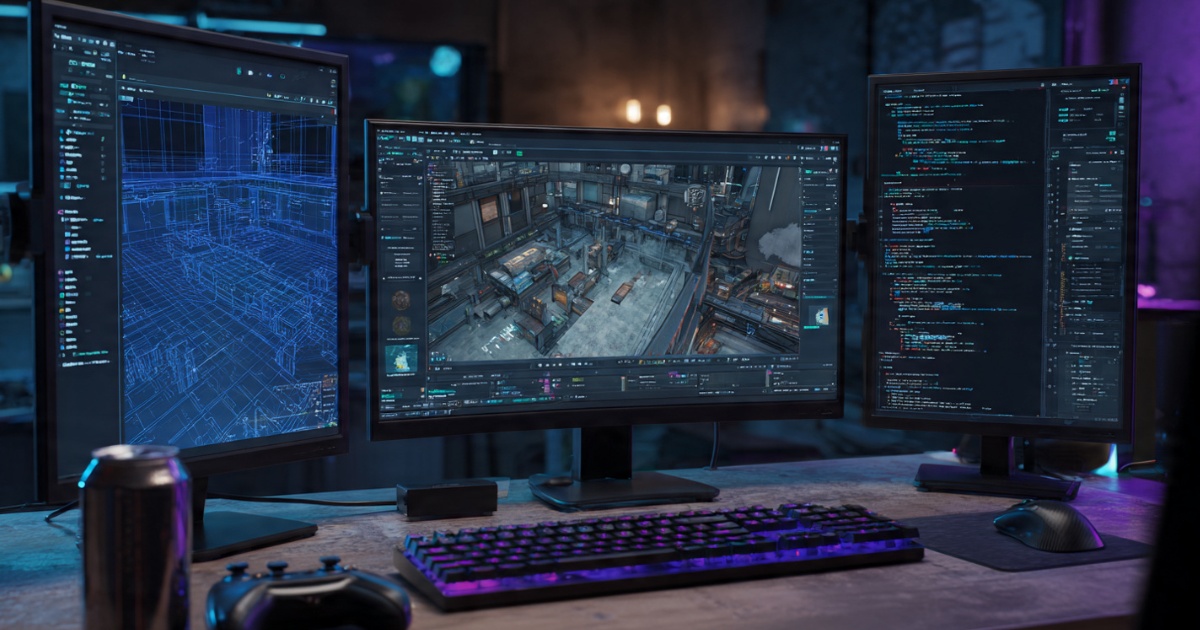
I modded a game once (won’t say which) to show the pathfinding debug overlay. My PC nearly exploded. There were thousands of calculations happening every second just so NPCs could walk around a market without colliding.
The brutal tradeoff: Smarter NPC pathfinding equals worse performance. So games cheat. They use simplified navigation meshes, cut corners on path recalculation, and hope you don’t notice when an NPC gets stuck.
Sometimes you notice.
Behavior Trees vs. Finite State Machines
This is where game AI gets interesting. Most NPC behavior runs on one of these systems:
Finite State Machines (FSM): NPC is in one state at a time. Idle, patrol, alert, combat. Simple, predictable, runs fast. This is why enemies in older games felt “robotic.” Because they literally were state machines.
Behavior Trees: More flexible, more human-like. NPCs can have multiple considerations running simultaneously. Wants to attack, but also wants to take cover, but also heard a noise over there. The tree evaluates priorities and decides.
Modern AAA games use behavior trees. Most indie games still use FSMs because behavior trees are complex to build and debug.
I tried implementing a behavior tree for an enemy AI in a game jam project. We had 48 hours. I spent 12 of them just on the behavior tree. It worked great until the enemy got near a ledge, then it had an existential crisis and stopped moving entirely.
Want to understand the underlying machine learning concepts that power modern game AI systems? Our guide on Machine Learning Basics breaks down how AI systems learn and adapt.
Procedural Generation: When AI Builds Your Game
No Man’s Sky promised 18 quintillion planets. They delivered. How? Procedural generation powered by algorithms that are basically AI without the learning part.
Games using procedural AI:
- Minecraft (terrain generation)
- No Man’s Sky (everything generation)
- Spelunky (level layouts)
- Left 4 Dead’s Director AI (enemy spawns, pacing)
I spent 200 hours in Minecraft, and I still find the terrain generation impressive. It creates realistic-looking landscapes using Perlin noise and biome systems. It’s not “intelligent” in the machine learning sense, but it’s computational creativity.
The Left 4 Dead Director
This is still the gold standard for AI-driven game pacing. The Director AI watches four metrics: player health, ammunition, stress level, and time since last combat. Then it spawns enemies, places supplies, and triggers events to keep you in the “fun zone.”
Too easy? Here come three Tanks. Too hard? Have some health packs and a breather.
I’ve played L4D2 for probably 400 hours, and every run feels different because the Director AI never spawns things the same way twice. That’s smart AI design. Not flashy, but effective.
For more on how AI analyzes and responds to data patterns in real-time, check out our article on Predictive Analytics with AI.
Machine Learning in Games: The New Frontier
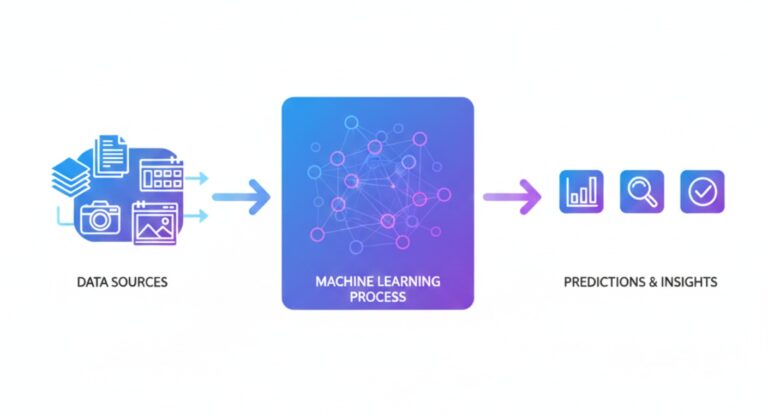
This is where it gets genuinely exciting. Traditional game AI uses rules. Machine learning lets AI actually learn.
Neural Networks Playing Games
Remember when DeepMind’s AI beat professional StarCraft 2 players? That wasn’t scripted behavior. The AI trained by playing millions of matches, learning strategies humans never considered.
Games experimenting with ML:
- FIFA (player animations, movement prediction)
- Forza (AI drivers trained on real player data)
- Ghost Recon Wildlands (enemy tactics learning)
The problem? Training ML models takes massive computing power. Most studios can’t afford it. So we’re seeing ML in AAA games with huge budgets, but smaller studios stick with traditional AI.
The NVIDIA GameGAN Example
NVIDIA trained a neural network to recreate Pac-Man by watching gameplay. It learned the rules, the ghost behavior, the maze layout, everything, just from observation. Then it generated a playable version.
That’s insane. And it suggests a future where game AI doesn’t need to be programmed, it watches and learns.
Whether that’s exciting or terrifying depends on your perspective. Personally? I think it’s both.
If you’re curious about the deep learning technology that makes this possible, our Deep Learning Explained article covers neural networks and how they learn complex patterns.
Combat AI: The Illusion of Intelligence
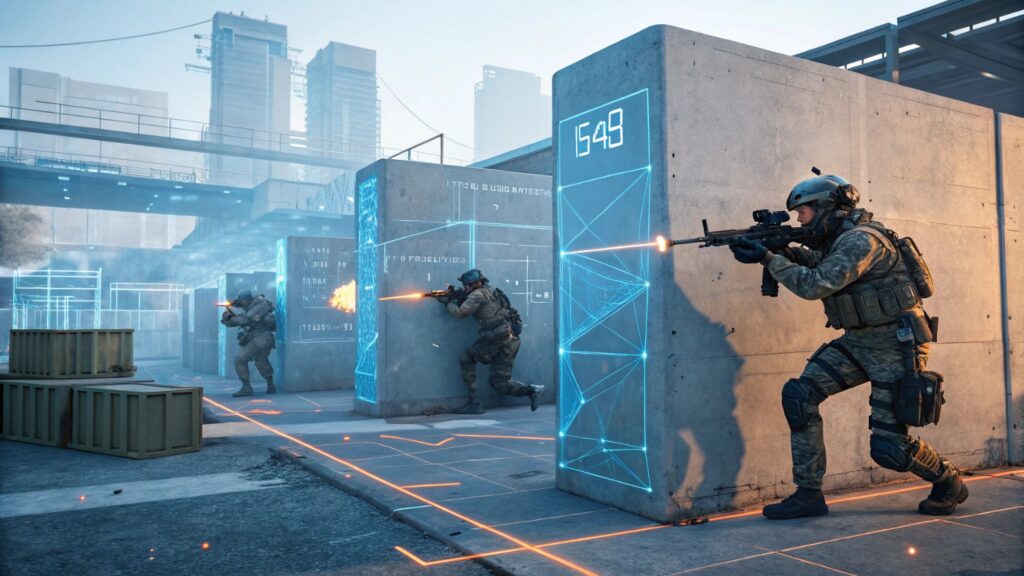
Enemy AI in combat games is mostly smoke and mirrors. I say this with love, but it’s true.
What makes combat AI feel smart:
- Taking cover (looks tactical, but it’s usually just “move to nearest cover point”)
- Flanking (pre-scripted positions, not actual strategy)
- Calling for backup (triggers based on health threshold)
- Suppressive fire (random shooting in your direction)
The Last of Us Part 2 has some of the best combat AI I’ve played, and even that uses tricks. Enemies call out your position to each other, which feels intelligent. But they’re not actually communicating. The game just plays voice lines when certain conditions are met.
Still looks great though. That’s the point.
The Cheating Problem
Game AI cheats. All of it. Has to.
In racing games, AI drivers get speed boosts to catch up (rubber banding). In strategy games, AI gets resource bonuses on harder difficulties. In shooters, enemy accuracy is artificially reduced so you don’t die instantly.
I had a conversation with a game designer who told me their AI could headshot players from 500 meters consistently. They had to program it to miss on purpose because perfect aim isn’t fun.
Game AI isn’t trying to be smart. It’s trying to be fun. Big difference.
Voice and Dialogue: The Next Evolution
This is changing fast. Like, really fast.
Traditional game dialogue: writers script every line, voice actors record them, designers implement branching trees. Limited, expensive, time-consuming.
AI-generated dialogue: Train an AI on an actor’s voice, generate dialogue dynamically based on context. Endless variations, minimal recording time.
Sounds great, right? Here’s the problem: AI voice generation has serious ethical issues. Voice actors are rightfully concerned about their jobs. And current AI voices still have that slightly uncanny quality.
But it’s coming. Some games are already experimenting with it.
I played a demo last month that used AI-generated NPC dialogue. When I asked an NPC about a quest, they responded based on my previous actions in the game. Not from a dialogue tree. Actually generated in real-time.
Technically impressive. Ethically complicated. I don’t have clean answers here.
For more context on how AI processes and generates human language, see our guide on Natural Language Processing.
The Tools Game Developers Actually Use
If you want to work with AI in games, here’s the tech stack:
Game engines with AI tools:
- Unreal Engine (behavior trees, AI perception, navmesh)
- Unity (NavMesh, ML-Agents toolkit)
- Godot (navigation, state machines)
Machine learning frameworks:
- Unity ML-Agents (reinforcement learning in games)
- TensorFlow (training models for behavior)
- PyTorch (research and experimentation)
I’ve messed around with Unity’s ML-Agents toolkit. It lets you train game AI using reinforcement learning, where the AI plays your game thousands of times to learn optimal strategies.
Setup is annoying. Training takes forever. But watching an AI go from complete failure to competent play is genuinely satisfying.
Want to get hands-on with AI development? Check out our list of AI Tools for Beginners to start experimenting with these technologies.
What I Wish More Games Did
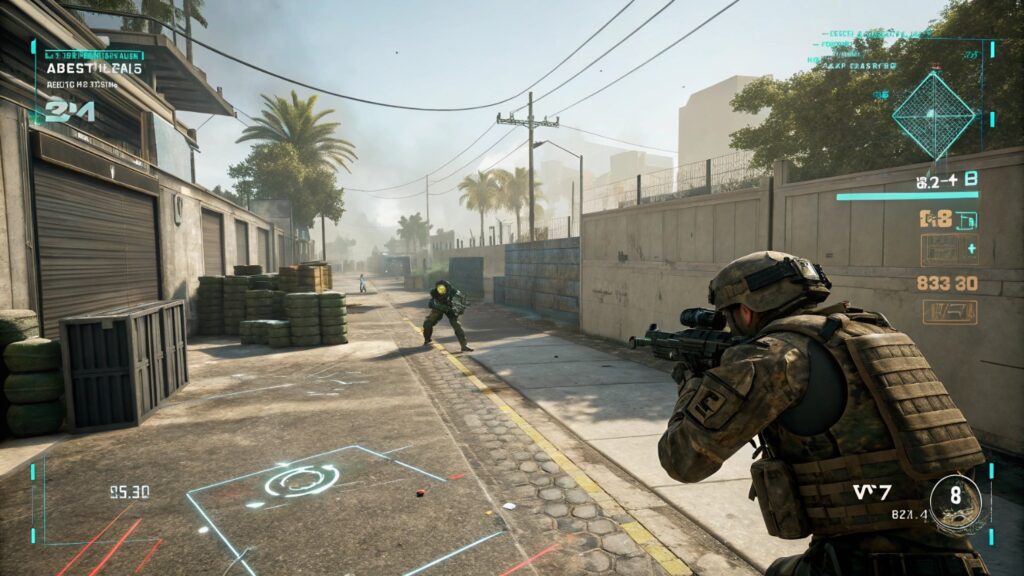
After playing games for 30+ years and working adjacent to the industry, here’s what I think would genuinely improve gaming AI:
Better contextual awareness. NPCs should react to things logically. If I’m wearing enemy armor, guards should be suspicious, not instantly hostile.
Memory that persists. If I steal from a merchant, they should remember next time I visit. Some games do this. Not enough.
Emergent behavior. Instead of scripting every scenario, give NPCs goals and let them figure out how to achieve them. This rarely works perfectly, but when it does, it’s magical.
More obvious AI cheating. If your game AI cheats, own it. Don’t pretend it’s playing fair when everyone knows it’s getting bonuses.
The Limitations Nobody Talks About
Game AI will never be “truly” intelligent in the way AI researchers define it. Know why?
It doesn’t need to be.
Game AI exists to serve gameplay. If an enemy is too smart, the game stops being fun. If NPCs are too realistic, they become unpredictable and frustrating.
I played a modded game once where someone implemented “realistic” NPC survival AI. NPCs hoarded food, attacked each other for resources, and refused to help the player because it was “dangerous.”
Technically brilliant. Completely unplayable.
Game AI succeeds when it creates the illusion of intelligence while actually being carefully constrained to make the game enjoyable. That’s the entire trick.
Where This Is Going
The future of AI in gaming is less about smarter enemies and more about personalized experiences.
Predictions I’m fairly confident about:
- Games that adapt entirely to your play style
- Procedurally generated storylines that feel hand-crafted
- NPCs with long-term memory and dynamic relationships
- Enemy AI that learns from the player base collectively
Predictions I’m less sure about:
- Full AI-generated games (not happening soon, quality issues)
- AI replacing human game designers (not happening, games need human creativity)
- Perfect natural language dialogue with NPCs (getting closer, but not there yet)
We’re probably 10 years from games that feel genuinely alive. Not scripted, not following behavior trees, but actually responding dynamically to player actions in ways that feel organic.
That’s exciting. Also slightly concerning. But mostly exciting.
To explore what comes next in AI development across all industries, read our take on the Future of Artificial Intelligence.
Final Thoughts
AI in gaming is weird because it’s AI that’s intentionally limited. It’s smart enough to challenge you, dumb enough to let you win, and predictable enough to feel fair.
The best game AI is invisible. You never think “wow, that AI is amazing.” You just think “this game feels good.”
And when game AI fails? When NPCs walk into walls or enemies do something hilariously broken? That’s fine too. Because perfect AI wouldn’t be fun.
Some of my favorite gaming moments are AI glitches. That Skyrim guard launching into space. That GTA NPC having a breakdown in traffic. Those aren’t failures. They’re features.
At least, that’s what I tell myself when I’m debugging why my enemy AI insists on jumping off cliffs.
Want to dive deeper into AI concepts, applications, and how it’s transforming industries beyond gaming? Head back to our complete Artificial Intelligence and Machine Learning guide for the full picture. And if you’re interested in seeing real-world examples of AI implementation, check out our AI Case Studies from companies pushing the boundaries.