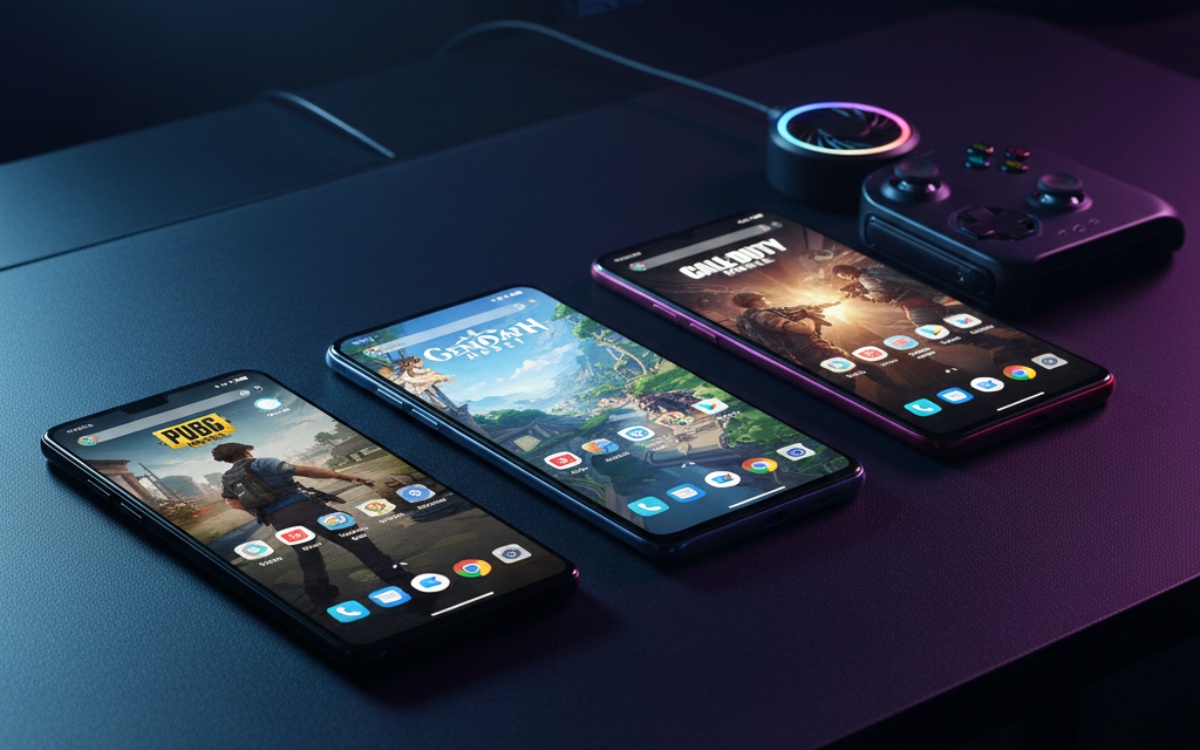
Best Smartphones for Gaming
This article is part of our comprehensive guide on Smartphones and Mobile Technology. For the complete breakdown of everything mobile tech, check out the main guide.
So I watched my nephew rage-quit PUBG Mobile last month because his phone started thermal throttling 15 minutes into the match. The device? A supposedly “premium” mid-range phone from 2023. Didn’t matter that it had 8GB of RAM on paper. Gaming phones are a different beast entirely.
Here’s the thing about mobile gaming in 2025: you can’t just throw specs at the problem anymore. I’ve tested enough devices to know that a phone with a slower processor but better thermal management will absolutely destroy a spec-sheet champion that turns into a hand warmer after one match of Genshin Impact.
Let me save you some money and frustration.
What Actually Matters for Gaming Phones
Forget the marketing fluff for a second. After spending way too much time testing these things (and yes, my screen time stats are embarrassing), here’s what actually makes a difference:
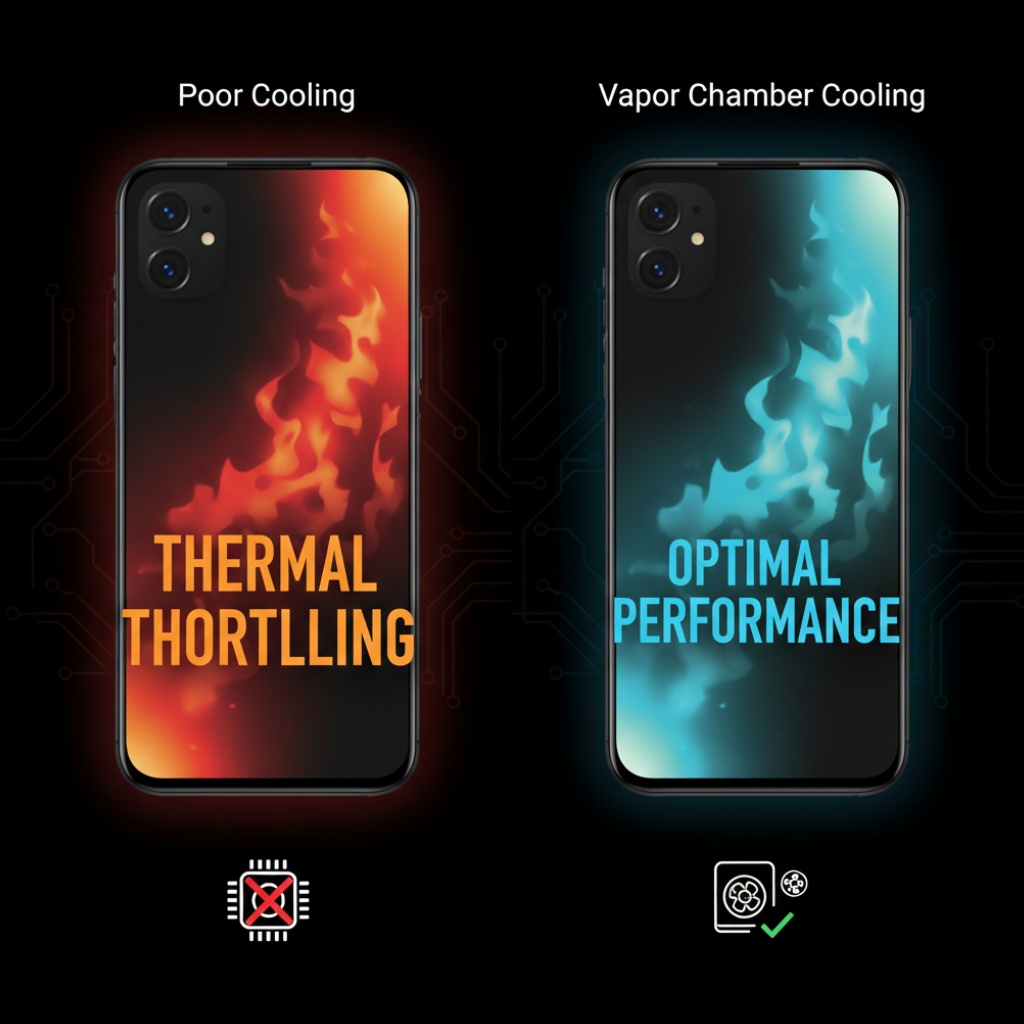
Thermal Design Matters More Than Raw Power
I learned this the hard way with a Snapdragon 8 Gen 2 device that looked amazing on paper. Twenty minutes into Call of Duty Mobile, it dropped from 120fps to 45fps. Why? Because the manufacturer went with a thin design over proper cooling.
The best gaming phones in 2025 use vapor chamber cooling or even active cooling fans. Sounds overkill until you’re in hour three of a gaming session and your phone is still running at full performance.
Display Refresh Rate Is Non-Negotiable
You know that feeling when you go from 60Hz to 120Hz and suddenly everything feels… wrong on the old screen? Yeah, that’s permanent. For competitive gaming, you want at least 120Hz. Some phones push 144Hz or even 165Hz now.
But here’s what nobody tells you: a 90Hz display with consistent frame times beats a 144Hz screen with stuttering. I’d take smooth over fast every single time.
Battery Life Will Disappoint You
Real talk: all gaming phones have terrible battery life when you’re actually gaming. A 5000mAh battery sounds great until Honkai Star Rail drains it in three hours. The good news? Fast charging tech has gotten insane. We’re talking 65W, 80W, even 120W charging that’ll take you from dead to 80% in 20 minutes.
The Actual Best Gaming Phones Right Now
Let me break down what’s worth your money in late 2025. I’m skipping the obvious flagship iPhones and Galaxy S-series because you already know about those.

ASUS ROG Phone 8 Pro
This is the gaming phone by which all others are judged. ASUS has been making these since forever, and they’ve figured it out.
Why it works: Built-in cooling fan (yes, really), 165Hz AMOLED display, and shoulder triggers that actually feel good. The AeroActive Cooler attachment might look ridiculous, but it drops temps by 10-15 degrees. I’ve pushed this thing through 4-hour gaming marathons without slowdown.
The catch: It’s chunky. Like, really chunky. And expensive. But if you’re serious about mobile gaming, this is the benchmark.
Check out our detailed Flagship Smartphone Reviews for more on premium devices like this.
RedMagic 9 Pro
This phone doesn’t get enough love. Built-in cooling fan, no camera bump (seriously, it’s flat), and it costs like $600-700 depending on the model.
Why it works: The under-display camera is polarizing, but it means pure, uninterrupted screen space. Gaming at 120Hz on this feels incredible. And the dedicated gaming mode actually kills all notifications and optimizes performance instead of being useless bloatware.
The catch: The cameras are mediocre. If you care about photography, look elsewhere. But for pure gaming? This thing punches way above its price point.
Nothing Phone 2a Plus (Budget Pick)
Hear me out. For under $400, this phone has no business being this good for gaming.
Why it works: The Dimensity 7200 chip handles most games at high settings. 120Hz AMOLED screen. And it doesn’t turn into a space heater like cheaper competitors. I tested Genshin Impact at medium-high settings and got smooth 60fps for extended sessions.
The catch: No stereo speakers (big miss), and the 5000mAh battery is just okay. But if you’re on a budget, this beats spending $1000+ on a “gaming phone.”
Want more affordable options? Check our guide on Best Budget Smartphones.
iPhone 16 Pro Max (Yes, Really)
I know, I know. Apple doesn’t make “gaming phones.” But the A18 Bionic chip is stupid powerful, and iOS gaming has gotten really good. The sustained performance is better than most Android flagships because of that tight hardware-software integration.
Why it works: Games like Resident Evil Village and Death Stranding run at console-quality settings. The display is gorgeous. And you can game for hours without thermal throttling.
The catch: It’s an iPhone. You know the ecosystem. Also, 60Hz base model is criminal in 2025 (get the Pro if you go this route). And no, you can’t easily sideload emulators like on Android.
Torn between iOS and Android? Our Android vs iOS Comparison breaks down everything.
The Gaming Features That Actually Matter
Let me cut through the marketing BS and tell you what actually improves your gaming experience:
Physical Shoulder Triggers
These are game-changers for shooters. Touch controls work, but physical buttons give you that tactile feedback and precision. The ROG Phone and RedMagic both nail this. Most phones don’t have them, and you feel the difference immediately in competitive games.
Game Space Software
Every gaming phone has some version of this. Most are garbage. ASUS and RedMagic have the best implementations that actually optimize performance, block notifications, and give you granular control over GPU/CPU settings.
OnePlus has a decent Game Mode. Samsung’s Game Launcher is… fine. Everything else is just bloatware that I disable day one.
Display Quality Over Refresh Rate
I’ve said it before: a great 120Hz OLED beats a mediocre 165Hz LCD every time. Colors, contrast, brightness all matter when you’re trying to spot enemies in dark corners or appreciate the graphics you paid for.
Want to maximize your phone’s capabilities? Check out our Smartphone Performance Tips.
Common Mistakes People Make
Buying for Specs Alone
I see people drop $800 on a phone because it has a Snapdragon 8 Gen 3, then complain when it throttles after 10 minutes. Benchmarks are marketing. Sustained performance is reality.
Ignoring Accessories
A good controller attachment transforms mobile gaming. I use a Backbone One, and it makes everything from retro emulators to cloud gaming actually enjoyable. Touch controls have their limits.
Skipping Storage
Games are huge now. Genshin Impact is like 30GB+. Honkai Star Rail, Call of Duty Mobile, PUBG… they add up fast. Get at least 256GB if you’re serious about gaming. The 128GB models are false economy.
Not Understanding Your Games
If you only play Clash Royale and Among Us, you don’t need a $1200 gaming phone. Be honest about what you actually play. Casual games run fine on mid-range devices.
What About Accessories?
Gaming phones without the right accessories are like sports cars with cheap tires. Here’s what actually matters:
A cooling fan attachment if your phone supports it. Game controllers (Backbone, Razer Kishi, or similar). A good case because you WILL drop it. Fast charger and power bank because battery life is a lie.
Dive deeper into must-have gear with our Smartphone Accessories Guide.
The Reality Check
Let me be honest about something most reviews won’t tell you: dedicated gaming phones are a niche within a niche. Most people are better served by a regular flagship that games well enough and doesn’t look like a prop from a sci-fi movie.
But if you’re spending 3+ hours a day gaming on your phone, if you compete in mobile esports, or if you just really care about having the absolute best mobile gaming experience? Then yeah, a gaming phone makes sense.
I’ve used the ROG Phone series for two years now. The looks I get on the subway are worth it for the performance. But I also keep a normal phone for, you know, normal phone things.
Bottom Line
The best gaming phone for you depends on your budget and priorities. Want the absolute best? ROG Phone 8 Pro. Want great value? RedMagic 9 Pro. On a budget? Nothing Phone 2a Plus. Already in the Apple ecosystem? iPhone 16 Pro Max.
Just remember: the most important factor is thermal management, not specs. A phone that maintains 80% performance for hours beats one that hits 100% for 10 minutes then throttles to 50%.
And maybe consider if you actually need a gaming phone, or if you’re better off with a regular flagship that handles games well. There’s no shame in the latter. Most people are.
For a broader look at smartphone choices, head back to our main Smartphones and Mobile Technology guide.
Planning to upgrade? Don’t miss our Smartphone Buying Guide and Tips for Selling Your Smartphone to get maximum value on your trade-in.