Smartphones with Longest Software Support: Which Phones Actually Get Updates?
You know what’s worse than buying a $700 smartphone? Realizing it’ll stop getting security updates in 18 months.
I learned this the hard way with a mid-range Android phone back in 2019. Great specs, decent camera, smooth performance. Then the updates just… stopped. Eight months after I bought it. Meanwhile, my colleague’s iPhone 7 from 2016 was still getting iOS updates in 2022.
That experience changed how I evaluate phones. Performance matters, sure. But if your phone becomes a security risk two years in, what’s the point?
So let’s talk about which manufacturers actually support their phones long-term, and why this matters more than most people think.
Why Software Support Actually Matters
Here’s what happens when your phone stops getting updates:
Security patches stop coming. You’re running outdated software that hackers know how to exploit. I’ve seen friends get hit with malware on abandoned Android phones. Not fun.
Your apps start breaking. Developers eventually stop supporting old OS versions. Instagram stops working. Your banking app throws errors. You’re forced to upgrade.
Performance degrades. Without optimization updates, newer apps run like garbage on older hardware. Even if the phone is physically fine.
Real talk: A phone with 3 years of updates is effectively a disposable device, no matter how good the specs are.
The Current Software Support Landscape
The industry has gotten better, but there’s still a huge gap between best and worst.
Apple: The Gold Standard
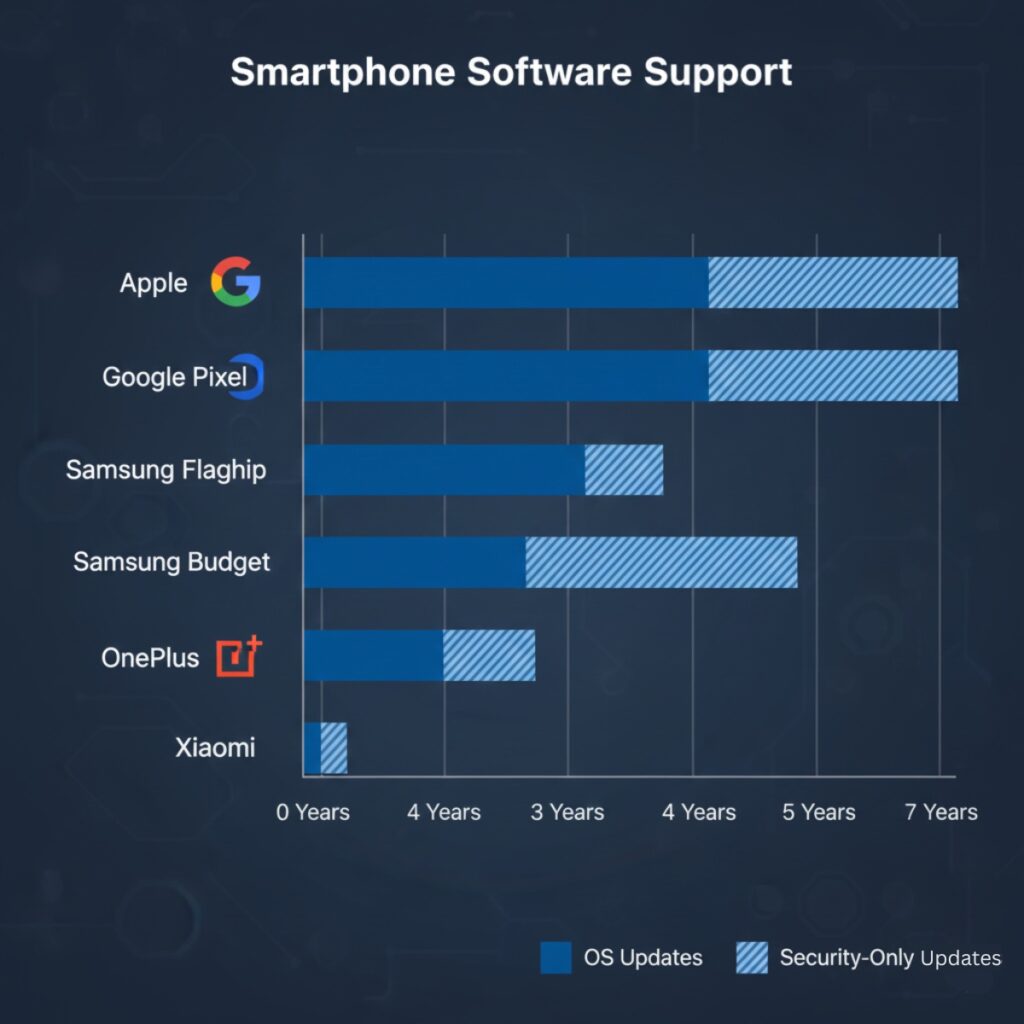
iPhones get 5-7 years of updates. That’s not marketing talk, it’s proven. The iPhone 6S from 2015 got iOS 15 in 2021. Six years of support.
Every iPhone gets updates at the same time. No carrier delays, no manufacturer tweaking. When Apple drops iOS 18, every compatible iPhone gets it immediately.
I switched to an iPhone two years ago after dealing with Android fragmentation hell. The consistency is honestly refreshing.
Google Pixel: Catching Up
Google finally figured it out. Pixel 8 and 8 Pro get 7 years of OS updates and security patches. That matches iPhone support now.
But here’s the catch: This only applies to Pixel 8 and newer. My Pixel 6 gets 5 years total (3 years OS, 5 years security). Still good, but not the same.
The Tensor chip makes this possible. Google controls the hardware and software, so they can optimize updates without dealing with Qualcomm’s support windows.
Samsung: Improved, But Complicated
Samsung promises 4 years of OS updates and 5 years of security patches for flagship phones. That’s Galaxy S series, Z Fold/Flip, and some A-series models.
Key word: Some. Budget Samsung phones still get 2-3 years max. Check before buying.
I tested a Galaxy S21 for work last year. It was on Android 14 while running 2021 hardware. Samsung’s gotten way better at this. But their midrange support is still inconsistent.
Everyone Else: Hit or Miss
OnePlus, Xiaomi, Oppo – they promise 3-4 years now. Whether they deliver? That’s where it gets sketchy.
I had a OnePlus 7T that was supposed to get Android 12. Took them 8 months after release to push it. By then, Android 13 was out. The update was also buggy as hell.
Check r/Android before trusting manufacturer promises. Real users will tell you if updates actually arrive.
Phones with the Best Long-Term Support Right Now
Let me break down actual models with proven or promised long-term support.
iPhone 15 Series (2023)
Expected support: Until 2030
These will likely get iOS updates through 2028-2030 based on Apple’s track record. The A17 Pro chip is powerful enough to handle future iOS versions easily.
Google Pixel 8/8 Pro (2023)
Guaranteed: 7 years (until October 2030)
First Android phones to match iPhone support. Google finally put their money where their mouth is.
Samsung Galaxy S24 Series (2024)
Guaranteed: 7 years of updates
Samsung matched Google and Apple. The S24, S24+, and S24 Ultra all get support until 2031.
iPhone SE (3rd Gen) (2022)
Expected support: Until 2027-2028
Budget option with Apple’s update commitment. Cheapest way to get long-term iOS support.
Samsung Galaxy S23 Series (2023)
Guaranteed: 4 years OS, 5 years security
Still in the update window. S23, S23+, S23 Ultra get updates through 2028.
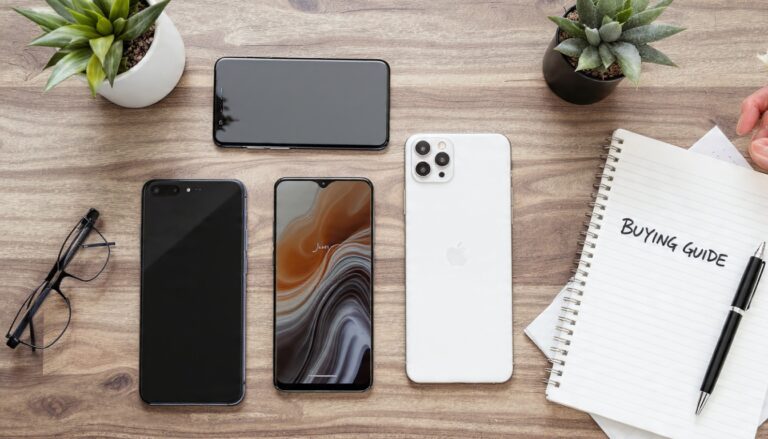
If you’re looking at other options, our smartphone buying guide covers how to evaluate update commitments versus other features. And if you’re torn between platforms, check out our Android vs iOS comparison for the full breakdown.
What Counts as “Long” Software Support?
Industry standard used to be 2 years. That was garbage.
Now, anything under 3 years is unacceptable for a phone over $400. You’re paying flagship prices for midrange support.
5 years is good. That’s what most flagships target now. Your phone stays secure and functional for a reasonable ownership period.
7+ years is excellent. That’s iPhone and top-tier Android territory. You can use the phone for 4-5 years and still resell it with updates remaining.
The Catch Nobody Mentions
Long software support doesn’t mean the phone will feel fast in year 6.
Apple throttled older iPhones with iOS updates. Remember batterygate? They slowed down iPhone 6 models to prevent shutdowns. Got sued over it.
Android phones struggle too. My Pixel 3 on Android 12 was noticeably slower than on Android 10. Updates add features, but they also add overhead.
So yes, you’ll get updates for 7 years. But will you want to use the phone for 7 years? Different question.
How to Check a Phone’s Update Status
Before buying any phone, do this:
- Google “[phone model] update policy”
- Check the manufacturer’s official page
- Search Reddit for “[phone model] updates” to see real experiences
- Look at the phone’s release date – support usually starts from launch, not purchase
For current phones, most manufacturers have support pages. Samsung has a list of devices by update tier. Google lists Pixel support on their store pages.
If a manufacturer won’t clearly state their update policy, that’s your answer. Don’t buy it.
My Honest Recommendations
Want the longest support? Get an iPhone 15 or Pixel 8. Both guarantee 7 years. Can’t go wrong either way.
On a budget? iPhone SE 3rd gen gets iOS updates for 5-6 years and costs $429. Best value for long-term support.
Android flagship? Samsung S24 series now matches Pixel with 7 years. Choose based on features, not update length.
Don’t buy: Any phone that won’t commit to at least 4 years of support in 2025. You’re asking for trouble.
This is all part of the bigger picture we cover in our comprehensive guide on smartphones and mobile technology. Software support is just one factor, but it’s become one of the most important.
The Bottom Line

Software support has improved massively in the last 3 years. We went from 2-year throwaway phones to 7-year commitments from major manufacturers.
But you still need to do your homework. Not all promises are equal, and budget phones often get left behind.
I’ve used phones that died software-wise long before the hardware failed. It’s frustrating. Don’t make my mistake.
Buy a phone with guaranteed long-term support. Your future self will thank you when you’re still getting security patches in 2030.
And if you want to know which current phones are actually worth buying for the long haul, check out our best smartphones of 2026 roundup. Or if you’re wondering how updates affect performance over time, our smartphone performance tips guide has you covered.