AI in Human Resources: What Actually Works (And What Doesn’t)
I’ve watched three companies implement AI recruiting tools in the last two years. One saved 40% of their hiring time. The other two? They’re still sorting through the mess.
Here’s the thing about AI in HR: it’s not magic. It won’t fix your broken hiring process or suddenly make your employees engaged. But when you use it right, it can handle the grunt work so your HR team can actually focus on, you know, humans.
Let me show you what’s actually working in 2025.
The Recruitment Side: Where AI Shines (Mostly)
Resume Screening That Doesn’t Suck
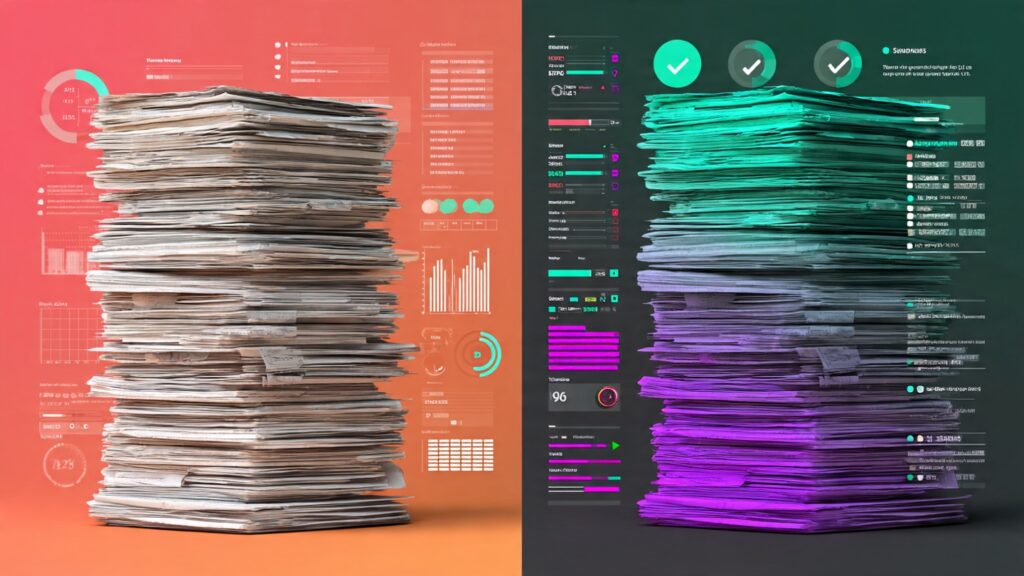
You know what’s soul-crushing? Reading 300 resumes for a single developer position. I’ve been on both sides of this, and it’s awful for everyone.
AI-powered applicant tracking systems can scan resumes in seconds. Tools like Greenhouse, Lever, and Workable now use natural language processing to match candidates against job descriptions. Not just keyword matching either – they’re getting decent at understanding context.
But here’s what the demos don’t tell you: you need to train these systems properly. I saw a company reject 80% of qualified candidates because they fed the AI their job description full of buzzwords and “10+ years required” for a junior role.
The AI learned from their existing hires. Guess what? If your current team lacks diversity, the AI will learn that pattern. You’ll just automate your bias faster.
Real talk: AI screening works best when you:
- Use it to surface candidates, not eliminate them
- Regularly audit the results for bias
- Keep a human in the final decision loop
- Feed it clear, realistic requirements
Chatbots for Initial Screening
Chatbots like Paradox and Olivia can handle first-round screening interviews. They ask basic questions, check availability, and schedule interviews. Sounds great, right?
It is… if you’re hiring for high-volume positions. Fast food, retail, customer service – these work well. The questions are straightforward, and candidates get instant feedback.
For technical roles? Less impressive. I’ve taken chatbot interviews for engineering positions, and they couldn’t handle follow-up questions or understand context. One asked me about my “Python snake handling experience” because I mentioned working with APIs.
Video Interview Analysis
This is where it gets weird. Some platforms analyze facial expressions, tone of voice, and word choice during recorded video interviews.
I’m skeptical. Very skeptical.
The tech claims to predict job performance based on micro-expressions. But cultural differences in eye contact, speech patterns, and body language make this a minefield. One candidate got flagged as “not enthusiastic” because they have a naturally monotone voice. They’re one of the best engineers I’ve worked with.
Use these tools cautiously. If at all.
Employee Engagement: The Tricky Part
Pulse Surveys That Actually Work
AI-powered survey tools like Culture Amp and Glint can analyze feedback patterns way faster than humans. They spot trends across departments, identify flight-risk employees, and flag toxic managers.
We used one at my previous company. It caught a problem in the DevOps team three months before people started quitting. The AI noticed sentiment dropping in weekly surveys and specific keywords appearing together: “burnout,” “on-call,” “support.”
The catch? You have to act on the data. We’ve seen companies survey their employees to death, get perfect insights from AI analysis, and then… do nothing. That’s worse than not surveying at all.
Personalized Learning Paths
This is one area where AI genuinely helps. Platforms like Degreed and EdCast use AI to recommend training based on your role, skills gaps, and career goals.
I’ve used these systems. They’re not perfect, but they beat the old “everyone watches the same compliance video” approach. The AI tracks what you already know, suggests relevant courses, and adapts as you learn.
The best implementations tie this to performance reviews and promotion paths. The worst just become another dashboard nobody checks.
Sentiment Analysis on Slack/Email
Yes, some HR tools scan internal communications to gauge employee morale. I have… mixed feelings about this.
On one hand, it can catch serious problems early. On the other hand, it’s creepy. Employees should know if their messages are being analyzed. And you better have crystal-clear privacy policies.
I won’t name the company, but I’ve seen this backfire spectacularly. Employees found out their Slack was being monitored, trust evaporated, and half the engineering team left within six months.
Talent Management: The Long Game
Skills Gap Analysis
AI can map your current workforce skills against future needs. It looks at project requirements, industry trends, and individual capabilities to identify gaps.
This actually works pretty well. We used it to realize we needed more Go developers before we started a major backend rewrite. Started training people six months early instead of scrambling to hire later.
Succession Planning
Some platforms use AI to identify potential leaders based on performance data, peer feedback, and skill assessments. It’s better than the old “who plays golf with the CEO” method, I’ll give it that.
But don’t let AI make these decisions solo. Leadership requires emotional intelligence, ethics, and judgment that algorithms can’t fully measure. Use AI to surface candidates, then let humans make the final call.
Turnover Prediction
This is creepy but useful. AI models can predict which employees are likely to quit based on engagement scores, time since last raise, job search patterns (if they’re using company resources), and dozens of other factors.
I know a company that uses this to proactively address retention issues. They don’t just predict attrition – they automatically trigger conversations between managers and at-risk employees.
The ethical question: should you intervene before someone has even decided to leave? I don’t have a great answer for that one.
What Actually Doesn’t Work (Yet)
Let’s be honest about the limitations:
Personality assessments: AI-powered tests that claim to predict culture fit are often just expensive horoscopes. They measure what people say, not how they actually behave.
Automated firing decisions: Some companies tried using AI to identify underperformers and automate terminations. This went exactly as badly as you’d expect. Don’t do this.
Emotion AI in interviews: Technology that claims to read emotions from facial expressions is built on shaky science. Different cultures express emotions differently. This tech has massive bias problems.
Fully autonomous HR: The dream of replacing HR with AI is nonsense. HR is fundamentally about human relationships, conflict resolution, and judgment calls. AI can assist, not replace.
How to Actually Implement This Stuff
If you’re thinking about adding AI to your HR stack, here’s what I’ve learned:
Start small. Pick one pain point. Don’t try to automate everything at once.
Get buy-in from HR. AI works best when HR professionals understand it and trust it. They need to own the implementation, not have it forced on them.
Test for bias constantly. Run regular audits. Check if your AI is systematically excluding certain groups. Fix it when you find problems.
Be transparent. Tell candidates and employees when AI is being used. Explain what it does and what it doesn’t do.
Keep humans in the loop. AI should augment human decision-making, not replace it. Especially for anything that affects someone’s job or career.
The Bottom Line
AI in HR works best for repetitive, data-heavy tasks: screening resumes, scheduling interviews, analyzing survey results, tracking skills.
It struggles with anything requiring emotional intelligence, cultural sensitivity, or complex judgment calls.
The companies seeing real benefits are using AI to free up HR teams to focus on strategic work. The ones struggling are trying to replace human judgment with algorithms.
Don’t buy the hype, but don’t ignore the potential either. Just remember: AI in HR is a tool, not a solution.
This article is part of our comprehensive guide on Artificial Intelligence and Machine Learning. For more on AI applications, visit the complete guide.
Related Reading:
- Learn the fundamentals: Machine Learning Basics
- See AI in another industry: AI in Healthcare
- Understand the ethics: Ethical Issues in AI
- Explore tools to get started: AI Tools for Beginners