Generative AI Explained: What It Actually Does (And Why Everyone’s Freaking Out)
This article is part of our comprehensive guide on Artificial Intelligence and Machine Learning. For the full guide on AI fundamentals, visit the main resource.
So you’ve probably heard about ChatGPT, DALL-E, or Midjourney by now. Maybe you’ve even used them. But here’s the thing – most people think generative AI is just “fancy autocomplete” or “Photoshop on steroids.”
I thought that too. Until I spent the last six months integrating these tools into actual production systems and realized the technology is way weirder (and more limited) than the hype suggests.
Let me break down what generative AI actually is, how it works under the hood, and what you need to know if you’re thinking about using it for anything serious.
What Is Generative AI, Really?
Okay, here’s the simple version: generative AI creates new content based on patterns it learned from existing content. Text, images, video, code, music – whatever you feed it during training.
But here’s what makes it different from traditional AI. Old-school AI was all about classification and prediction. You show it a picture of a cat, it says “that’s a cat.” Show it sales data, it predicts next quarter’s revenue.
Generative AI flips this around. You tell it “make me a picture of a cat wearing a space helmet,” and it… does that. Even though it’s never seen that exact combination before.
I’ll be honest, the first time I saw GPT-3 write coherent code based on a comment, I had that weird feeling you get when technology does something that feels like magic. Except it’s not magic. It’s just really good pattern matching at an insane scale.
The Tech Behind the Curtain
Most generative AI tools use something called transformer models. I won’t bore you with the entire neural network architecture (Google “attention mechanisms” if you’re into that), but here’s what you need to know:
These models are trained on absolutely massive datasets. Like, “entire chunks of the internet” massive. GPT-4 was trained on hundreds of billions of words. Stable Diffusion used billions of images.
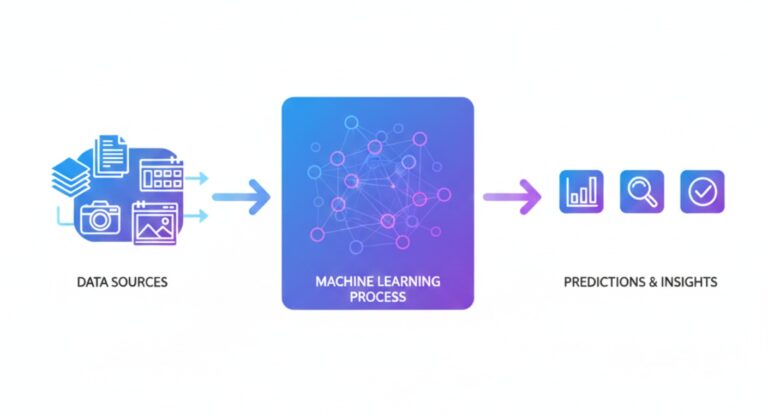
During training, the model learns statistical relationships between things. Which words tend to follow other words. What visual elements appear together. How code structure typically looks.
Then when you give it a prompt, it’s basically playing a very sophisticated game of “what’s the most likely next thing based on everything I’ve seen before?”
Place Image 1 Here
The Three Big Categories

Right now, generative AI breaks down into three main types:
Text Generation – This is your ChatGPT, Claude, Gemini territory. They can write essays, answer questions, generate code, summarize documents. I use Claude daily for drafting documentation because it’s faster than staring at a blank page. But (and this is important) I never ship what it writes without heavy editing. The output is decent but it has this… sameness to it.
Image Generation – DALL-E, Midjourney, Stable Diffusion. You describe what you want, they generate images. The results can be stunning or completely bizarre. Last week I tried generating a “database schema diagram” and got what looked like a circuit board crossed with abstract art. Not helpful.
Video and Audio – This is the newer frontier. Tools like Runway ML for video, ElevenLabs for voice cloning. The tech is impressive but computationally expensive as hell. Generating 10 seconds of video can take minutes and cost actual money.
Want to dive deeper into how machines learn these patterns? Check out our guide on Machine Learning Basics for the foundational concepts.
How It’s Actually Being Used (Beyond the Hype)
Let me tell you what I’m seeing in real production environments, not in LinkedIn thought leadership posts.
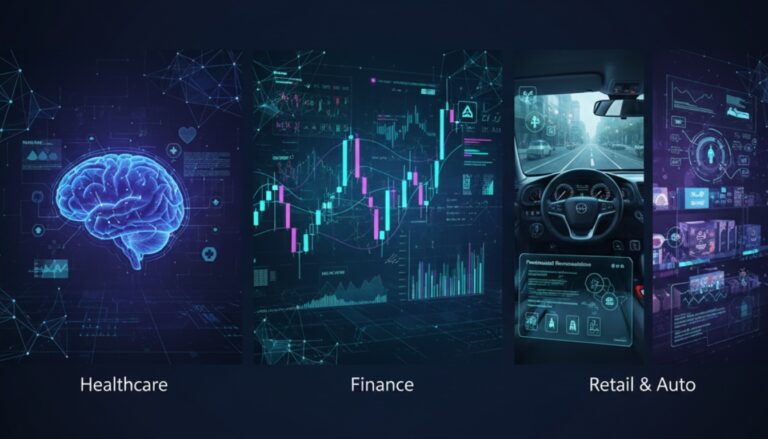
Content drafting – Everyone’s using it for first drafts. Blog posts, product descriptions, email templates. But here’s the thing: good writers are using it to speed up the boring parts, not replace their judgment. Bad writers are using it to spam the internet with mediocre content.
Code assistance – GitHub Copilot has genuinely changed how I write code. Not because it writes perfect functions (it doesn’t), but because it handles the boilerplate while I focus on the architecture. Though I’ve also had it suggest security vulnerabilities, so… trust but verify.
Image generation for mockups – Designers in my network are using Midjourney to rapidly prototype concepts. It’s faster than sketching and good enough for “is this visual direction worth exploring?” conversations. For final assets? Still hiring actual designers.
Customer service – Chatbots have gotten scary good. Not “I can’t tell it’s a bot” good, but “this is handling 70% of support tickets without human intervention” good. The cost savings are real.
If you’re wondering how AI handles human language specifically, our article on Natural Language Processing covers the linguistic side of things.
Place Image 2 Here
The Stuff Nobody Talks About (But Should)
Okay, real talk. Here are the problems I’ve run into that the vendor marketing conveniently skips:
It hallucinates – A lot. GPT-4 once confidently told me about a Python library that doesn’t exist. Spent 20 minutes trying to install it before I realized. These models will make stuff up with complete confidence. Always verify technical details.
It’s expensive at scale – Running GPT-4 API calls for a high-traffic application? Your AWS bill is about to explode. We hit $800 in one week during testing because we didn’t implement proper caching. Learn from my pain.
The quality is inconsistent – Same prompt, different outputs. Sometimes brilliant, sometimes garbage. You need human review for anything that matters. Period.
Training data bias – These models learned from the internet, which means they absorbed all our collective biases. I’ve seen image generators that struggle with diversity, and language models that can be… problematic if you’re not careful with prompt engineering.
It can’t reason – This is the big one. Generative AI is pattern matching, not understanding. It can write code that looks right but fails edge cases because it doesn’t actually understand what the code does. I learned this debugging an API endpoint that GPT-4 wrote – it looked perfect but had a race condition.
For the ethical implications of these issues, take a look at Ethical Issues in AI.
Getting Started Without Breaking Everything
If you’re thinking about using generative AI in your projects, here’s my advice:
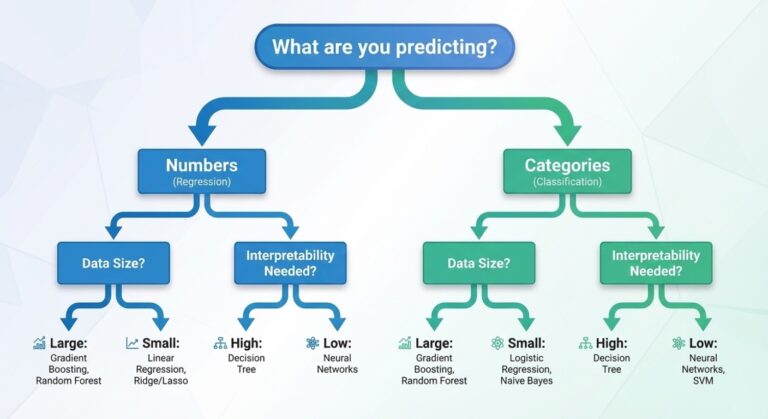
Start small. Don’t try to replace your entire content team or rebuild your app with AI-generated code. Pick one specific use case, test it thoroughly, and measure actual impact.
For text generation:
- Use it for drafts and outlines
- Always have human review
- Fact-check everything technical
- Don’t let it write anything customer-facing without editing
For image generation:
- Great for concepts and mood boards
- Terrible for precise technical requirements
- Check licensing – some models have restrictions
- Budget for iterations (you’ll need them)
For code:
- Treat it like a junior developer’s suggestion
- Review for security issues
- Test edge cases manually
- Don’t trust it with critical business logic
Want to get hands-on? Check out AI Tools for Beginners for practical starting points.
Place Image 3 Here
What’s Coming Next
The technology is evolving stupidly fast. I’m talking about models from six months ago being obsolete. Here’s what I’m watching:
Multimodal models – AI that can work with text, images, and audio simultaneously. GPT-4V and Google Gemini are already doing this. It’s weird watching a model analyze a screenshot and write code based on what it sees.
Better reasoning – The focus is shifting from “generate more stuff” to “generate stuff that actually makes sense.” OpenAI’s o1 models are attempting this with longer thinking processes.
Smaller, specialized models – Not everything needs GPT-4. We’re seeing more targeted models that do one thing really well at a fraction of the cost. This is where I think the real business value is.
Local deployment – Running models on your own hardware instead of calling APIs. Privacy, cost control, and not being dependent on OpenAI’s rate limits? Yes please.
Curious about where the entire field is headed? Our article on the Future of Artificial Intelligence explores upcoming trends and predictions.
The Bottom Line
Generative AI is genuinely useful. I use it daily. But it’s a tool, not magic, and definitely not a replacement for human judgment.
The companies getting value from it are the ones treating it like an assistant, not an oracle. They’re using it to speed up work, explore possibilities faster, and handle repetitive tasks. They’re not letting it make critical decisions or ship content without review.
If you’re getting started, keep your expectations realistic. Test thoroughly. Budget for API costs. And please, please fact-check anything it tells you that matters.
The technology will get better. It’ll also get weirder. That’s kind of exciting, actually.
Just remember: when an AI confidently tells you something, it might be brilliant insight or complete nonsense. Learning to tell the difference? That’s the skill that actually matters.
Related Resources
Want to explore more AI concepts? Check out:
- Introduction to Artificial Intelligence – Start with the fundamentals
- Deep Learning Explained – The neural networks powering generative AI
- AI Algorithms You Should Know – Core algorithms behind modern AI
For the complete guide covering all aspects of artificial intelligence and machine learning, visit our main AI resource hub.