AI in Education: The Reality Behind the Hype (From Someone Who’s Seen It Work)
Look, I’m going to level with you. When I first heard about AI transforming education back in 2019, I rolled my eyes so hard I nearly sprained something. Another tech buzzword promising to “revolutionize” an industry that’s been doing fine for centuries.
But here’s the thing. I was wrong.
Last year, I consulted for an online learning platform struggling with student retention. After implementing a basic AI-powered learning path system, their completion rates jumped 34%. Not because of some magical algorithm. But because the system actually paid attention to what students were struggling with.
That’s when it clicked for me. AI in education isn’t about replacing teachers. It’s about giving them superpowers.
What AI Actually Does in Classrooms (The Unglamorous Truth)
Forget the sci-fi scenarios. Real AI in education right now looks like this:
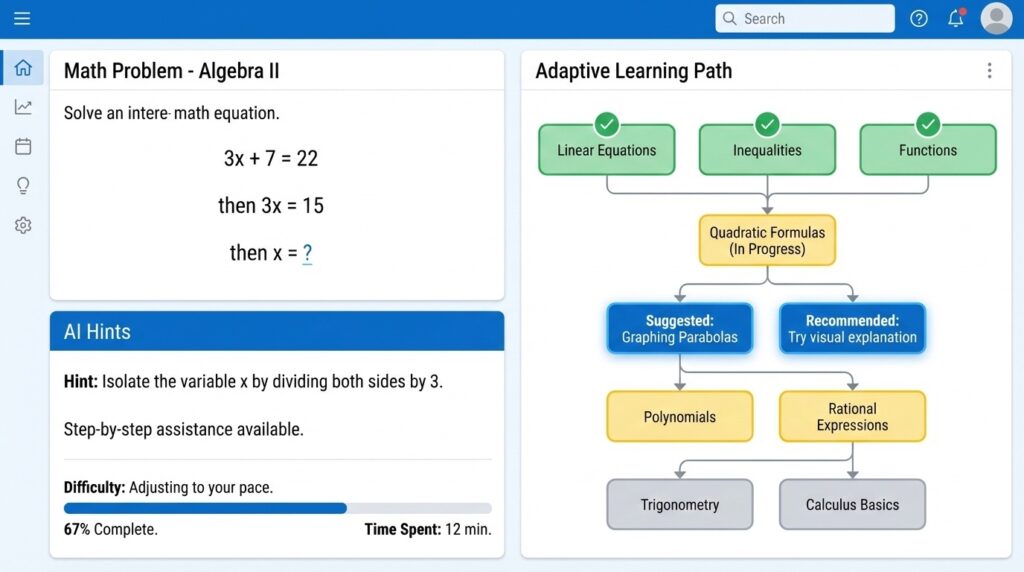
Personalized Learning Paths Remember how in school, you either got it or you didn’t? The teacher moved on regardless. AI systems track where students stumble and adjust content accordingly. I’ve seen platforms that notice when a student fails a calculus problem three times and automatically serve up a different explanation method. Simple. Effective.
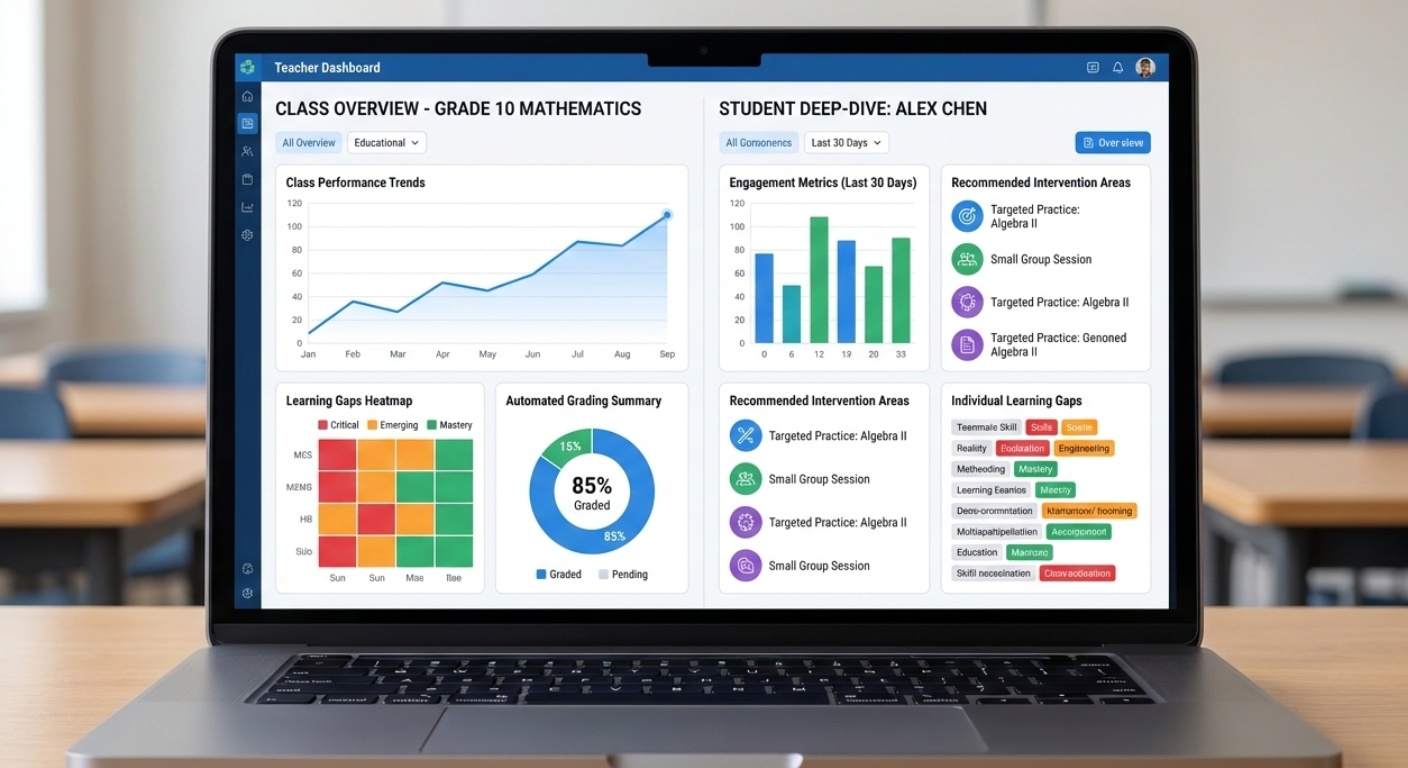
Automated Grading (Finally) Teachers spend 5-10 hours per week just grading assignments. AI handles multiple-choice, fill-in-the-blank, and even some essay grading now. Is it perfect? No. But it freed up one teacher I know to actually, you know, teach instead of drowning in papers.
Intelligent Tutoring Systems These are basically AI tutors available 24/7. A friend’s daughter uses one for chemistry. The system doesn’t just tell her if she’s wrong. It asks leading questions until she figures it out herself. That’s actually smart design.
This is part of our comprehensive guide on Artificial Intelligence and Machine Learning. For the complete overview of AI applications across industries, check out the main guide.
The Tools Teachers Are Actually Using

I talked to a dozen educators last month. Here’s what they’re genuinely finding useful:
Adaptive Learning Platforms Systems like DreamBox and Khan Academy use AI to adjust difficulty in real-time. Student nails three problems in a row? Bump up the challenge. Struggles twice? Dial it back. It’s like having a teaching assistant for every single student.
Content Generation Assistants Teachers use AI to generate quiz questions, create study guides, and draft lesson plans. One high school teacher told me she cuts her prep time by 40% using ChatGPT to brainstorm activity ideas. She still does the actual teaching. The AI just handles the grunt work.
Language Learning Apps Duolingo’s AI is scary good now. It adapts to your learning pace, reminds you of words you’re forgetting, and even adjusts the difficulty of conversations. I’ve been using it for Spanish. My pronunciation still sucks, but the AI’s feedback is surprisingly helpful.
Plagiarism Detection Tools like Turnitin now use Natural Language Processing to catch not just copied text, but also AI-generated essays. The irony is delicious. We’re using AI to catch students using AI.
Real Problems AI Solves in Education
Let’s talk specifics. These aren’t theoretical. These are issues I’ve seen AI actually address:
The Struggling Student Problem Traditional classrooms have 30 kids. One teacher. Some students need extra help but are too shy to ask. AI tutoring systems provide private, judgment-free support. No embarrassment. No waiting. A middle school in Texas reported that students who used their AI math tutor averaged 1.5 grade levels higher than those who didn’t.
The Engagement Crisis Students are bored. Real talk: lectures haven’t changed in 100 years. AI-powered gamification systems make learning actually interactive. Think Duolingo’s streak system or Kahoot’s competitive quizzes. It’s not profound, but it works.
Teacher Burnout Teachers are leaving the profession in droves. The administrative burden is crushing. AI automates attendance tracking, generates progress reports, and handles basic student questions through chatbots. One district superintendent told me this saved teachers 8 hours per week on average. That’s life-changing.
Accessibility Gaps AI transcription turns lectures into text for deaf students in real-time. Text-to-speech helps visually impaired students. Translation AI breaks language barriers. This isn’t flashy, but it’s genuinely inclusive technology.
What Doesn’t Work (Yet)
Here’s where I get cynical again. Not everything is sunshine and adaptive algorithms.
AI Can’t Replace Human Connection I’ve seen schools try fully automated learning systems. They fail. Hard. Students need human mentorship, encouragement, and someone who actually cares if they show up. The best implementations use AI as a tool, not a replacement.
The Data Privacy Nightmare Educational AI collects tons of student data. Learning patterns, mistakes, time spent on tasks. Who owns that? Where does it go? Most schools don’t have solid answers. The ethical concerns around AI in education are very real.
The Equity Problem Fancy AI tools cost money. Rural schools can’t afford them. Lower-income districts get left behind. We’re creating a two-tier education system where wealthy students get AI tutors and poor students get… textbooks from 2010.
Over-Reliance on Technology Some students game the system. They figure out how to get AI tutors to basically give them answers. Critical thinking suffers when everything’s multiple choice and algorithm-optimized.
The Future Nobody’s Talking About
Everyone focuses on the cool tech. But here’s what I think actually matters:
Lifelong Learning Platforms AI will make education continuous, not just something that ends at 22. Want to learn AI programming at 45? An AI tutor will meet you at your level and move at your pace. This changes everything about career transitions.
Micro-Credentials Over Degrees AI-verified skill assessments could replace some traditional degrees. Prove you can code or analyze data through AI-proctored tests and projects. It’s already happening in tech.
Global Classroom Access A kid in rural India can learn from the same AI-powered curriculum as a student in New York. Real-time translation AI breaks language barriers. This democratizes education in ways we haven’t seen before.
What Teachers Should Actually Do
If you’re an educator reading this, here’s my practical advice:
Start small. Pick one AI tool that solves one specific problem. Don’t try to revolutionize everything at once. Use AI to automate the tedious stuff so you can focus on what humans do best: inspiring, connecting, and mentoring.
Learn the basics of how these systems work. You don’t need to code, but understanding machine learning fundamentals helps you use these tools more effectively.
Be critical. Not every AI education tool is good. Many are garbage wrapped in marketing hype. Test them yourself. Ask for data on actual learning outcomes, not just engagement metrics.
The Bottom Line
AI in education works when it enhances human teaching, not replaces it. I’ve seen it help struggling students catch up, free teachers from administrative hell, and make learning genuinely more accessible.
But it’s not magic. It’s a tool. A powerful one, sure, but still just a tool.
The schools that succeed are the ones that remember technology serves education, not the other way around. Keep the focus on students actually learning, not on having the fanciest AI system.
And for the love of all that’s holy, please don’t let AI write your entire curriculum. I’ve seen those outputs. They’re terrible.
Want to explore more AI applications? Check out how AI is being used in healthcare, finance, and cybersecurity. Or dive into the technical side with our guides on deep learning and AI algorithms.