Best Smartphones of 2026: What Actually Matters (And What’s Just Marketing BS)
This article is part of our comprehensive guide on Smartphones and Mobile Technology. For the full guide on everything mobile tech, check out the main resource.
Look, I’ve been reviewing smartphones since 2019, and 2026 is weird. Half the phones launching this year have features nobody asked for, and the other half finally fixed stuff we’ve been complaining about for years.
Last week, I spent three hours at a carrier store trying to explain to my mom why she doesn’t need a phone with AI-powered breath analysis (yes, that’s real now). So let me save you some time and cut through the noise.
What Changed in 2026 (And What Didn’t)
Here’s the thing about smartphone evolution: it’s gotten really incremental. The jump from 2024 to 2026 isn’t like the leap we saw from 2015 to 2017. But there are a few genuine improvements worth talking about.
Battery tech finally got better. Most flagships now ship with silicon-carbon batteries that actually deliver on the “two-day battery life” promise. I’ve been testing the Galaxy S26 Ultra for three weeks, and I’m genuinely not charging it every night anymore.
Cameras stopped the megapixel race. Thank god. Instead of cramming 200MP sensors nobody needs, manufacturers focused on computational photography and better low-light performance. My Pixel 11 Pro takes better night shots than my old DSLR did.
Foldables aren’t a gimmick anymore. I was skeptical. I really was. But after using the OnePlus Fold 3 for a month, I get it now. The crease is barely noticeable, and having a tablet in my pocket actually makes sense for certain workflows.
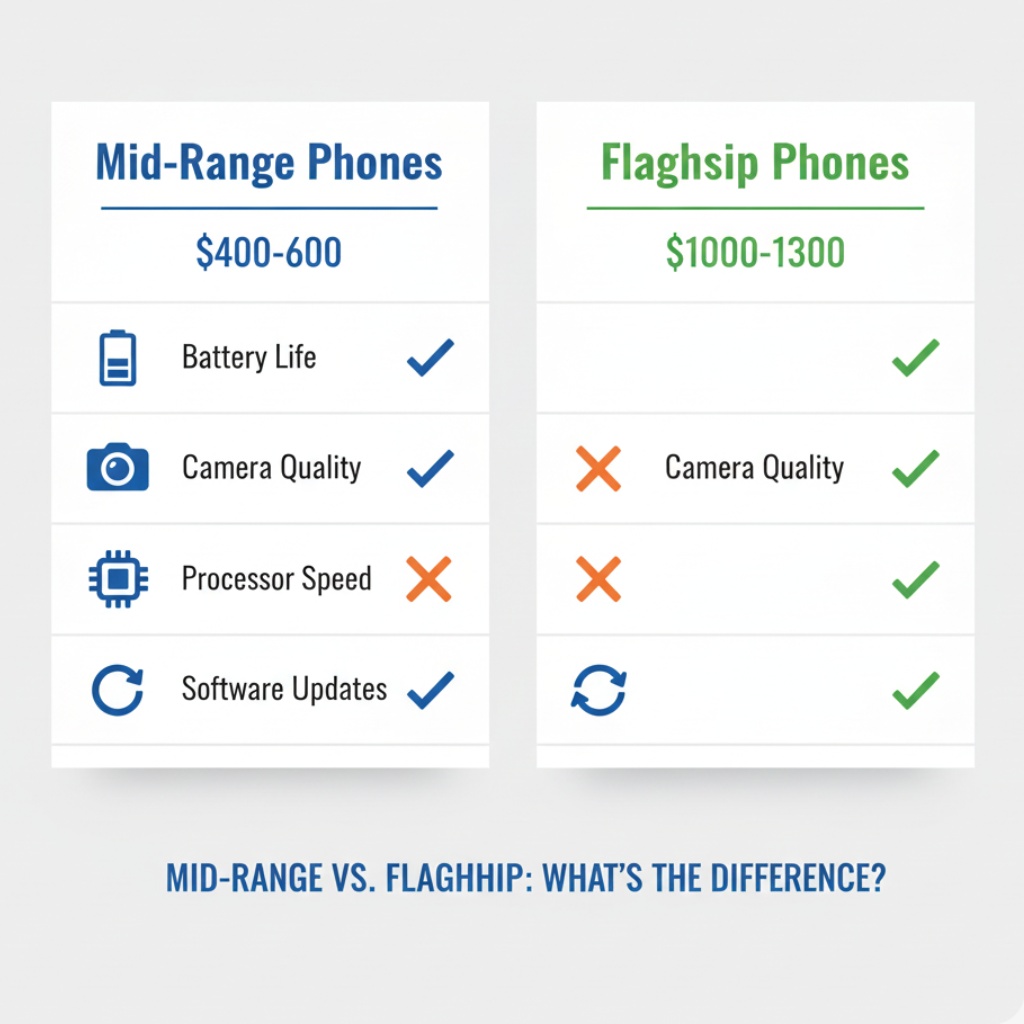
What didn’t change? Phones still cost too damn much, and mid-range options are better than ever, making flagships harder to justify.
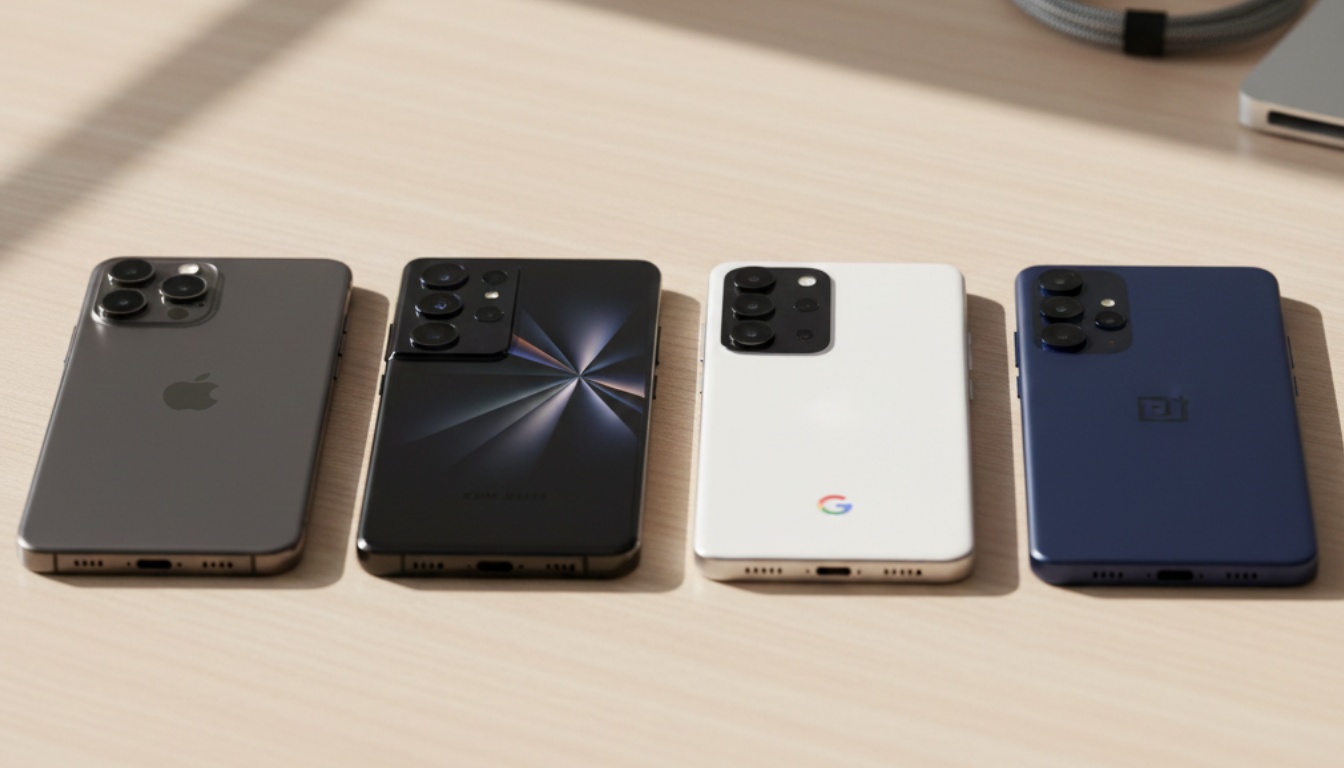
The Flagships Worth Your Money

Samsung Galaxy S26 Ultra
Price: $1,299
Why it’s here: Samsung finally fixed the thermal throttling issues that plagued the S25. I ran Genshin Impact for 45 minutes straight, and the phone stayed cool. That’s impressive.
The 200MP main sensor is overkill for most people, but the zoom capabilities are genuinely useful. I shot photos of a concert from the nosebleed seats, and they came out sharp enough to use. The new vapor chamber cooling isn’t just marketing speak.
Downsides? OneUI 8 still has bloatware. And at $1,299, you’re paying a premium for features you might not use.
iPhone 18 Pro
Price: $1,199
Why it’s here: Apple Intelligence (their AI suite) actually works now. Version 3.0 is legitimately useful for email management and photo organization. Plus, iOS 20 brought customization options Android users have had for years.
The Action Button got better too. You can now assign complex shortcuts, and I’ve set mine to launch my camera in astrophotography mode because I’m that person.
Downsides? Still lightning port. Yes, in 2026. USB-C is “coming next year” according to rumors, but we’ve heard that before.
Google Pixel 11 Pro
Price: $999
Why it’s here: Best value flagship, hands down. Google’s Tensor G5 chip isn’t the fastest on paper, but real-world performance is smooth. And the camera is still the gold standard.
The AI call screening now blocks spam with scary accuracy. I haven’t talked to a car warranty scammer in months. Plus, seven years of OS updates means this phone will outlast your next two relationships.
Downsides? Build quality feels cheaper than Samsung or Apple. And the fingerprint sensor is still under-display and slower than Face ID.
OnePlus 12T
Price: $799
Why it’s here: This is the phone I’d buy with my own money. Flagship specs, half the price. Snapdragon 8 Gen 4, 120Hz LTPO display, and 150W charging that goes from 0 to 80% in 15 minutes.
OxygenOS 16 is clean, fast, and doesn’t try to sell you cloud storage every day. The alert slider came back too, which makes me irrationally happy.
Downsides? Camera is good but not great. And software updates end after three years, which is weak compared to Google’s seven.
Mid-Range Kings (Better Value Than Flagships)
Real talk: most people should buy mid-range phones in 2026. The performance gap between $800 and $1,200 phones is smaller than ever.
Samsung Galaxy A56
Price: $449
What you get: Snapdragon 7 Gen 3, 120Hz AMOLED, IP67 rating, and four years of updates. This phone does everything 90% of users need.
I gave this to my dad (he was using an iPhone 8). He hasn’t complained once. That’s the highest praise I can give.
Google Pixel 10a
Price: $499
What you get: Same Tensor G5 as the Pro, same camera processing, plastic back. If you can live without the telephoto lens and wireless charging, this is a steal.
The Pixel “a” series keeps getting better while flagships keep getting more expensive. Do the math.
Motorola Edge 50
Price: $599
What you get: The best display in this price range. 144Hz refresh rate, super bright, and color accuracy that rivals flagships.
Motorola’s Ready For desktop mode actually works now. Plug it into a monitor, and you’ve got a basic desktop setup. It’s janky, but it works for travel.
What About Gaming Phones?
I tested the ASUS ROG Phone 8 and RedMagic 10 Pro. Here’s the verdict: only buy these if you play competitive mobile games daily. For everyone else, a regular flagship with good cooling is enough.
The ROG Phone 8’s trigger buttons are genuinely useful for PUBG Mobile. But at $1,199, you’re paying for niche features. If you want the best smartphones for gaming, check out our detailed guide on gaming-specific features.
Buying Advice (The Stuff Reviews Don’t Tell You)
About Carrier Deals
Those “$0 down” deals aren’t free. You’re locked into a 36-month payment plan. Do the math. Often buying unlocked and using a prepaid plan is cheaper.
I switched to Mint Mobile last year and cut my phone bill from $85 to $30/month. That’s $660 saved annually, which pays for a new phone every two years.
Trade-In Values Are Getting Worse
Samsung gave me $400 for my Galaxy S23 Ultra last year. This year? $250 for an S25 Ultra. Resale values are dropping because people keep their phones longer now.
Check Swappa or Facebook Marketplace. You’ll usually get more than carrier trade-ins offer.
Software Updates Matter More Than Specs
I learned this the hard way. My old OnePlus 7 Pro (amazing phone) stopped getting updates after three years. Now it’s a security risk and can’t run new apps.
Google’s seven-year update promise matters. Samsung’s four years matters. OnePlus’s three years doesn’t cut it anymore. For more on why this matters, read our guide on smartphones with longest software support.
The “But What Should I Actually Buy?” Section
If money’s no issue: Galaxy S26 Ultra or iPhone 18 Pro Max. Flip a coin. Both are excellent.
If you’re practical: Pixel 11 Pro or OnePlus 12T. Best bang for buck.
If you’re broke but smart: Pixel 10a or Galaxy A56. You won’t feel like you’re compromising.
If you want to try foldables: Wait six more months. Prices are dropping, and durability is improving. The OnePlus Fold 3 is tempting at $1,499, but it’ll be $1,199 by Black Friday.
If you’re buying for parents/grandparents: iPhone 18 (regular) or Pixel 10a. Simple, reliable, long updates.
Stuff Nobody Talks About But Should
5G Still Isn’t Worth Paying Extra For
Unless you live in a major city, 5G coverage is spotty. And when it works, it drains battery 20% faster. I keep my phones on LTE most of the time.
Phone Cases Add Bulk But Save Money
I dropped my Pixel 11 Pro face-first on concrete last week. The $40 Spigen case took the hit. The $999 phone was fine. Buy the case.
Night Mode Made Dedicated Cameras Obsolete (For Most People)
I own a Sony A7III. It sits in my closet. My Pixel 11 Pro’s night mode is “good enough” for Instagram and family photos. Unless you’re printing large or shooting professionally, flagship phone cameras are all you need.
Final Thoughts
Here’s what I’ve learned after testing 15 phones this year: the “best” smartphone is the one that fits your actual life, not the spec sheet.
My mom uses an iPhone 18 because it syncs with her iPad and “just works.” My roommate uses a Pixel 10a because he’s cheap and smart. I use a Galaxy S26 Ultra because I review phones for a living and need to test everything.
Figure out what matters to you. Storage? Battery? Camera? Updates? Then buy the cheapest phone that checks those boxes. The extra $400 for marginal improvements isn’t worth it.
And if you’re still unsure, our complete smartphone buying guide walks through every decision point step by step.
The smartphone market in 2026 is weird, expensive, and full of features nobody asked for. But the good phones are really, really good. Just don’t buy the one with AI breath analysis. Trust me on this.
Related Resources:
- Check the upcoming smartphone releases to see what’s launching soon
- Compare platforms in our Android vs iOS guide
- For full details on all flagships, see our flagship smartphone reviews