Upcoming Smartphone Releases: What’s Actually Worth Waiting For
This article is part of our comprehensive guide on Smartphones and Mobile Technology. For everything you need to know about choosing and using smartphones, check out the full guide.
Look, I’ve been tracking phone launches for seven years now, and here’s what I’ve learned: 90% of “leaked” features are either fake or get cut before launch. The other 10%? Usually disappointing in real-world use.
But every year, a few phones actually deliver on their promises. Let me walk you through what’s coming in the next few months and which releases you should actually care about.
Why Phone Launch Seasons Matter (More Than You Think)
I used to buy phones whenever mine broke. Big mistake. Bought a Galaxy S23 in August 2023, then the S24 dropped in February with better cameras and a $100 price cut on the S23. Felt like an idiot.
Here’s the thing: phone manufacturers follow predictable schedules. Samsung drops their Galaxy S line in January/February. Apple does iPhones in September. Google’s Pixels land in October. If you know these patterns, you can time your purchase to avoid buyer’s remorse.
The Big Launches Coming Soon

Samsung Galaxy S25 Series (Expected: January/February 2025)
Samsung’s already teasing this one, and the leaks are everywhere. What we’re probably getting:
The Good Stuff:
- Snapdragon 8 Gen 4 across all models (finally, no more Exynos drama in some regions)
- Improved night mode photography that might actually compete with Pixel
- Faster charging that’s still slower than Chinese brands
The Meh:
- Design that looks identical to the S24
- Battery improvements that are probably marginal
- AI features nobody asked for
Real talk: if you’ve got an S23, you can skip this. S22 or older? Yeah, this’ll feel like a real upgrade.
iPhone 16 Series (Expected: September 2025)
Apple’s next lineup is where things get interesting. I’m not usually an iPhone guy, but some of the rumored changes are hard to ignore.
What’s Probably Coming:
- A17 Pro chip in standard models (finally bringing last year’s flagship power to regular iPhones)
- Action button on all models, not just Pro versions
- Camera improvements that’ll make Android users jealous (again)
- USB-C with faster transfer speeds on Pro models
The Annoying Part: Apple will probably keep the base iPhone 16 at 60Hz refresh rate. In 2025. When $200 Android phones have 120Hz. Come on, Apple.
If you’re on an iPhone 12 or 13, this is your year. iPhone 14 or 15? Save your money.
Google Pixel 9 Pro (Expected: October 2025)
Google’s gotten better at keeping secrets, which means most of what I’m seeing is educated guessing based on their patterns.
Likely Features:
- Tensor G4 chip that’s hopefully more efficient (Pixel 8 Pro runs hot, ask me how I know)
- Camera improvements focused on video (about time)
- Seven years of software updates (Google’s new standard)
My Prediction: This’ll be the best Pixel yet for photography. But it’ll probably still have average battery life and get uncomfortably warm during extended camera sessions. That’s just what Tensor chips do.
Check out our best smartphones for photography if camera quality is your main priority.
The Wild Cards Worth Watching
OnePlus 12T/13 (Expected: Late 2025)
OnePlus used to be the budget flagship killer. Now they’re just… expensive. But their recent phones have been solid, and I’m curious about their next moves.
What makes them interesting: 100W+ charging that actually works, clean software that doesn’t feel like bloatware hell, and cameras that have improved dramatically over the past two years.
Nothing Phone 3 (Expected: Mid-2025)
Look, Nothing’s gimmicky LED lights aren’t for everyone. But their Phone 2 was genuinely good, and I respect that they’re trying something different in a market full of glass rectangles that all look identical.
If the Phone 3 keeps the mid-range pricing and improves the cameras, this could be a sleeper hit.
Foldable Phone Updates
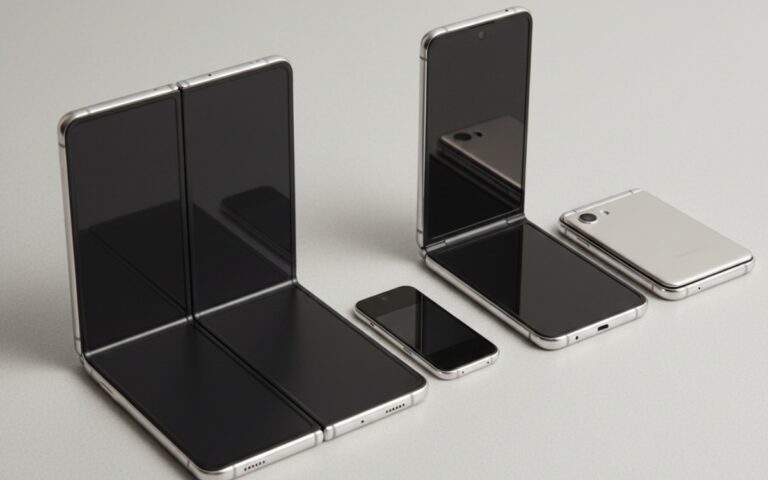
The foldable market is getting crowded. Samsung’s Z Fold 6 and Z Flip 6 are expected in July/August, and they’ll probably dominate headlines. But honestly? Chinese brands like Honor and Oppo are making foldables that are thinner, lighter, and more practical.
The problem: most of them don’t officially sell in Western markets. If you’re considering a foldable, read our foldable smartphones explained guide first. They’re cool, but they’re not for everyone.
What About Budget and Mid-Range Phones?
Here’s where it gets fun. The budget segment is exploding with value.
Phones to Watch:
- Nothing Phone 2a Plus – Clean Android experience, $300-400 range
- Samsung Galaxy A56 – Solid mid-ranger with great display
- Google Pixel 8a – Last year’s flagship experience at mid-range prices
- Motorola Edge 50 series – Underrated and often overlooked
I bought my mom a Pixel 7a last year for $350. She came from an iPhone 8, and she thought I’d given her a $1000 phone. That’s how good the mid-range has gotten.
For more affordable options, check our best budget smartphones roundup.
How to Actually Track Upcoming Releases
Forget tech blogs that post “leaked” renders from random Twitter accounts. Here’s what I actually do:
Reliable Sources:
- Official brand accounts (Samsung, Apple, Google post teasers)
- FCC filings (boring but accurate)
- Retail leaks from carriers (T-Mobile employees always know first)
- Supply chain reports from Bloomberg and Reuters
Red Flags:
- “Exclusive leak” from unknown sources
- Renders that look too polished
- Features that sound impossible (“10,000mAh battery in 6mm phone!”)
- Prices way lower than previous models
Should You Wait or Buy Now?
This is the question I get most. Here’s my framework:
Wait if:
- Your current phone works fine
- A new model drops in the next 2-3 months
- You’re eyeing a phone that just launched (prices drop fast)
Buy now if:
- Your phone is dying/broken
- The next model is 6+ months away
- You can get a great deal on last year’s flagship
I waited three months for the Pixel 8 Pro last year. Totally worth it. But I’ve also bought phones “out of season” when I found a killer Black Friday deal. There’s no perfect answer.
If you’re overwhelmed by choices, our smartphone buying guide breaks down exactly how to choose based on your needs.
The Hype Cycle Problem
Every year, tech Twitter loses its mind over features that end up being irrelevant. Remember when everyone thought curved screens were the future? Or when “AI cameras” were supposed to revolutionize photography?
Here’s what actually matters:
- Battery life (nobody talks about this enough)
- Software update commitment
- Build quality and durability
- Real-world performance, not benchmark scores
The rest is marketing.
My Predictions for 2025-2026
Based on seven years of watching this industry, here’s what I think we’ll see:
- Faster charging becomes standard – 65W+ even on mid-range phones
- Foldables get cheaper – $800 foldables by end of 2025
- AI features nobody wants – Every brand will add “AI” to everything
- Longer software support – 5+ years becomes the norm
- Better cameras, slightly – Incremental improvements, not revolutions
Want to know what else is coming? Check out smartphone trends to watch in 2026 for the bigger picture.
Final Thoughts
Look, I’ve bought phones at launch. I’ve waited for sales. I’ve traded in old devices and sold them myself. There’s no perfect strategy.
But if you understand release cycles, you can avoid overpaying and get a better deal. You’ll also stop feeling FOMO every time a new phone drops, because you’ll know whether it’s actually worth your money.
The best phone is the one that meets your needs at a price you’re comfortable with. Everything else is just marketing.
And if you’re still using a phone from 2020 or earlier? Almost any new phone will blow your mind. Don’t overthink it.
For more smartphone guides, reviews, and buying advice, visit our complete Smartphones and Mobile Technology hub.