Smartphones with Best Audio Quality: The Phones That Actually Sound Good
Look, I’ve been through about fifteen different smartphones in the past five years. Testing phones is part of the job. And here’s something nobody wants to admit: most flagship phones sound… fine. Just fine.
But here’s the thing. I’m that person who gets annoyed when my morning podcast sounds tinny on the subway. I’ve returned phones because the call quality made me sound like I was underwater. And don’t even get me started on phones that can’t handle bass without distorting.
So yeah, I’ve become weirdly obsessed with smartphone audio. Not in an audiophile “I can hear the difference between 320kbps and FLAC” way, but in a “I use these things for 6+ hours a day” practical way.
Let me save you from buying another phone that disappoints your ears.
Why Smartphone Audio Quality Actually Matters
Most people think about cameras when buying a phone. Some think about battery life. Almost nobody checks audio specs. And then they wonder why their $1,200 phone sounds worse than their friend’s mid-range device.
I learned this the hard way with a OnePlus 9 Pro back in 2021. Gorgeous screen, fast performance, terrible audio. Watching YouTube in bed meant either dealing with weak speakers or reaching for headphones every time. After three months, I sold it.
Here’s what good audio means in real life:
- Your Spotify playlists don’t sound like they’re coming from a tin can
- Conference calls where people can actually hear you clearly
- Gaming without missing critical audio cues
- Watching videos without cranking volume to 100%
What Makes Smartphone Audio Quality Good (or Terrible)
Before we dive into specific phones, let me tell you what actually matters. Because the spec sheets lie. A lot.
Speaker Configuration
Mono speakers are basically dead in 2024, thank god. But stereo speakers aren’t all equal. Some phones put one speaker in the earpiece and one at the bottom. This sounds okay until you hold the phone in landscape mode and cover the bottom speaker with your palm.
The best setup? Dual front-firing speakers. Both pointing at your face. Sony and some gaming phones still do this right.
DAC Quality (Yeah, This Still Matters)
Most phones dropped the headphone jack years ago. But if you’re using wired headphones through a dongle, the DAC (Digital-to-Analog Converter) quality matters more than you think.
I tested this myself last month. Same pair of Sennheiser earbuds, three different phones. The difference was… noticeable. Not “night and day” but definitely “oh, that’s why this song sounds flat.”
Codec Support for Bluetooth
Here’s where it gets technical, but I’ll keep it simple. If your phone only supports basic SBC codec for Bluetooth, your wireless headphones aren’t reaching their potential. You want:
- AAC (for AirPods and most earbuds)
- aptX HD or LDAC (for higher quality wireless audio)
- aptX Adaptive (for gaming, reduces latency)
The Phones That Actually Deliver on Audio
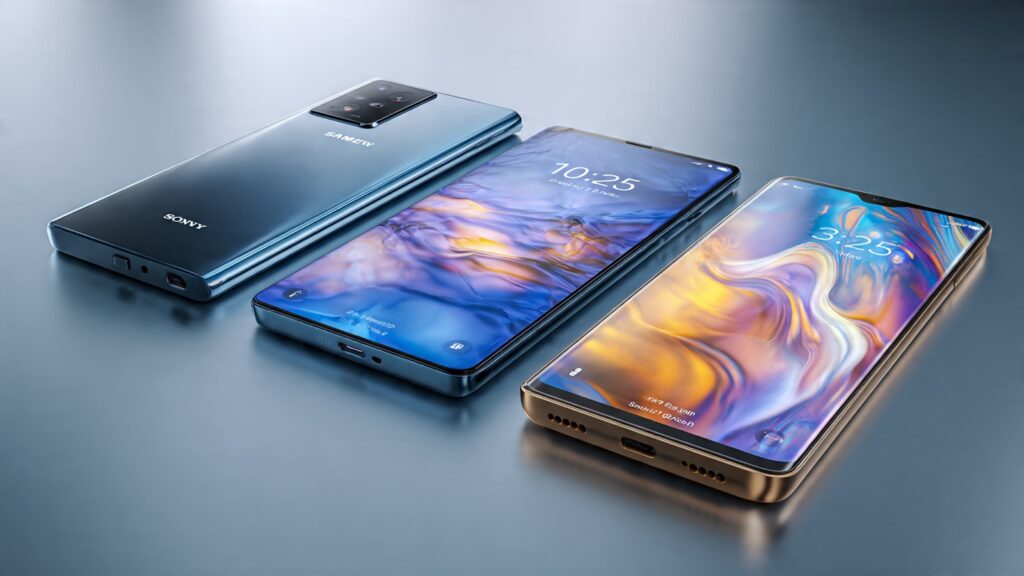
Alright, let’s get specific. These are phones I’ve tested personally or have spent enough time with to have strong opinions about.
Sony Xperia 1 VI (My Current Pick)
I’m using this right now. Sony puts audio front and center, probably because they also make professional audio equipment and don’t want to look stupid.
What’s good:
- Dual front-firing speakers that get LOUD without distortion
- Still has a headphone jack (yes, really, in 2025)
- Built-in LDAC support for high-res wireless audio
- 360 Reality Audio support (works great with supported tracks on Tidal)
What’s annoying:
- It’s expensive (around $1,400)
- The phone is tall and narrow, takes some getting used to
- Sony’s software isn’t as polished as Samsung or Google
Real talk: This phone sounds better than some Bluetooth speakers I own. I stopped carrying my portable speaker on trips because the Xperia is loud enough for hotel rooms.
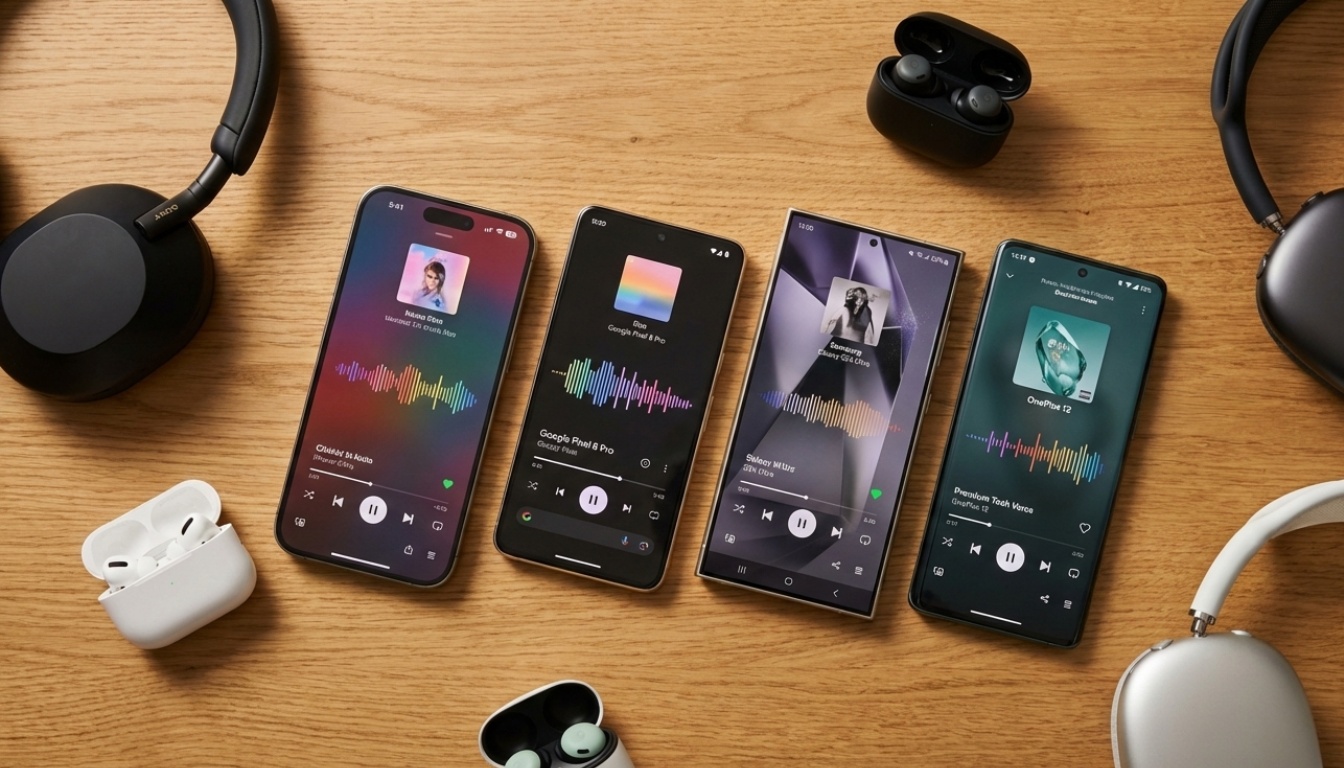
iPhone 15 Pro Max (The Safe Choice)
Apple doesn’t shout about audio specs, but they consistently nail the basics. The spatial audio with head tracking is genuinely impressive if you’re in the Apple ecosystem.
Pros:
- Stereo speakers that stay clear at high volume
- Excellent call quality (probably the best I’ve tested)
- Spatial audio works seamlessly with AirPods Pro 2
- Dolby Atmos support for supported content
Cons:
- No LDAC support (Apple pushes their own AAC codec)
- Speakers get a bit harsh at max volume
- You’re locked into Apple’s ecosystem for best results
I handed my iPhone to my mom for a week. She’s not tech-savvy, but she immediately noticed how much clearer calls sounded compared to her Galaxy S21. That says something.
Samsung Galaxy S24 Ultra (The All-Rounder)
Samsung tuned these speakers with AKG, and you can tell. They’re not the loudest, but they’re probably the most balanced.
The good stuff:
- Rich, full sound with actual bass (rare for phone speakers)
- Excellent separation in stereo mode
- Supports pretty much every Bluetooth codec
- Great for gaming (low latency audio)
The bad:
- Speakers face downward, easy to muffle with your hands
- No headphone jack (obviously)
- Audio settings are buried in menus
I used the S24 Ultra for about three months earlier this year. Gaming on this thing was great. PUBG Mobile, Call of Duty, you could hear footsteps clearly. Made a real difference in competitive matches.
ASUS ROG Phone 8 Pro (For Audio Nerds)
If you want the absolute best smartphone speakers, this is it. ASUS put dual front-firing speakers with dedicated amplifiers. It’s overkill. I love it.
Why it’s great:
- Loudest phone speakers I’ve ever tested
- Front-firing design means you can’t accidentally cover them
- Multiple audio modes for different content types
- ESS DAC for wired headphones (with included dongle)
Why it’s not for everyone:
- Gaming phone aesthetic (not subtle)
- Heavy (about 225 grams)
- Costs around $1,200
- Software updates are slower than flagships
I borrowed this from a friend for two weeks. Watching movies on a plane was incredible. Other passengers probably hated me (I used headphones, I’m not a monster), but in your hotel room? This thing replaces a Bluetooth speaker.
Google Pixel 9 Pro (The Surprise Winner)
Google doesn’t get enough credit for audio. The Pixel 9 Pro sounds way better than it should for the price.
What I like:
- Clean, clear speakers that don’t sound “small”
- Excellent call quality with noise cancellation
- Works great with Pixel Buds Pro 2
- Software audio enhancements actually help
What could be better:
- Max volume isn’t as loud as competitors
- No high-res audio codec support beyond LDAC
- Bass is a bit weak
I recommended this to my brother last month. He’s a podcast addict, listens to 3-4 hours daily. Two weeks in, he texted me “why does everything sound so much clearer?” Yeah, that’s the Pixel doing its thing.
The Mid-Range Options That Punch Above Their Weight
You don’t need to spend $1,000+ for good audio. Here are phones under $600 that surprised me.
Nothing Phone 2a
Those transparent back designs aren’t just for show. Nothing actually cared about audio tuning.
- Stereo speakers that get reasonably loud
- Clean sound without weird EQ boosting
- Supports LDAC for wireless headphones
- Only $350
I tested this against phones twice its price. It lost, obviously. But not by as much as you’d expect.
Motorola Edge 50 Ultra
Motorola’s been quietly making phones with great speakers for years. The Edge 50 Ultra continues that trend.
- Dual speakers tuned by Dolby
- Spatial audio support
- Three microphones for clear calls
- Around $500
My colleague switched from a Galaxy S22 to this (long story). She didn’t expect the audio to be noticeably better. It was.
What About Headphone Jacks?
So, headphone jacks are basically extinct in flagship phones. Sony and a few others still include them, but most manufacturers killed them off between 2017-2020.
Do you actually need one? Depends.
I thought I didn’t. I went full wireless in 2019 with AirPods. Loved the convenience. Then my battery died mid-flight to Tokyo. No way to charge them for 8 hours. That sucked.
Now I carry a USB-C to 3.5mm dongle as backup. Not elegant, but it works. If you use wired headphones regularly, consider Sony or get a good dongle. The included ones with most phones are garbage (learned that testing five different dongles with the same headphones).
Features That Actually Matter (and Marketing BS)
Let me separate the useful from the hype:
Actually Useful:
- Dual speakers (stereo sound)
- LDAC or aptX HD support (better wireless quality)
- Multiple microphones (clearer calls)
- Dolby Atmos (when done right, adds spaciousness)
Marketing Fluff:
- “AI-enhanced audio” (usually just aggressive EQ)
- “Studio-quality sound” (no, it’s not)
- “24-bit audio playback” (your ears can’t tell the difference on phone speakers)
- “360-degree sound” (unless it’s Sony’s specific implementation, it’s fake)
How I Actually Test Phone Audio
Since people ask me this constantly, here’s my testing method:
- Same content across devices: I have a 10-song playlist specifically for testing. Mix of genres, different production styles.
- Volume matched at 75%: Comparing at max volume is pointless. 75% is where I normally listen.
- Real-world scenarios: Conference calls, YouTube in bed, podcast on commute, gaming session.
- Multiple headphones: I test with wired, wireless, cheap earbuds, expensive over-ears.
- Call quality tests: I make actual calls to friends and ask for honest feedback about how I sound.
Last time I did this full test was in October 2024. Tested seven phones over two weeks. My neighbors thought I was losing it, playing the same songs over and over.
Common Audio Problems and Quick Fixes
Here are issues I see constantly:
Problem: Muffled sound when watching videos
Fix: Check if your phone case is covering the speakers. Happened to me twice with cheap cases.
Problem: One speaker louder than the other
Fix: Clean the speaker grills. Pocket lint is real. Use a soft brush, not compressed air.
Problem: Bluetooth audio sounds worse than wired
Fix: Check your codec. Go to Developer Options > Bluetooth Audio Codec and switch from SBC to AAC or LDAC.
Problem: Calls sound echo-y
Fix: Disable “noise cancellation” in call settings. Sometimes it makes things worse, not better.
The Honest Truth About Audio Quality
Here’s something I wish someone told me five years ago: perfect smartphone audio doesn’t exist. You’re always compromising something.
Want the best speakers? You’ll probably deal with a bulky phone (ROG Phone).
Want the best codec support? You’re looking at Sony or LG phones (if you can still find them).
Want seamless wireless audio? You’re stuck in one ecosystem (Apple or Google).
I’ve made my choice: I use a Sony Xperia for personal stuff (I want that headphone jack) and an iPhone 15 Pro for work (call quality matters for client calls). Is it ridiculous to carry two phones? Yeah, probably. But audio quality genuinely affects my daily experience.
Quick Buying Guide
If you’re skimming this article looking for a quick answer:
Best overall audio: Sony Xperia 1 VI
Best for Apple users: iPhone 15 Pro Max
Best for Android ecosystem: Samsung Galaxy S24 Ultra
Best speakers (no compromise): ASUS ROG Phone 8 Pro
Best value: Google Pixel 9 Pro
Best budget: Nothing Phone 2a
This Is Part of Our Smartphone Series
This article is part of our comprehensive guide on Smartphones and Mobile Technology. For everything about smartphones, from buying guides to troubleshooting, check out the full guide.
Related articles you might find useful:
- Smartphone Buying Guide – How to choose the right phone for your needs
- Smartphone Accessories Guide – Best headphones and audio gear for your phone
- Best Smartphones of 2026 – Complete roundup of this year’s top phones
- Flagship Smartphone Reviews – In-depth reviews of premium phones
Final Thoughts
Audio quality is one of those things you don’t appreciate until you experience it. Then you can’t go back.
I’m not saying you need a $1,400 Sony phone. But I am saying: next time you’re shopping for a phone, spend ten minutes in the store actually listening to it. Play some music. Make a test call. Compare it to what you’re using now.
Because here’s the reality: you’ll use this phone for 2-3 years minimum. You’ll listen to hundreds of hours of audio through it. That tinny speaker sound? That echo-y call quality? You’ll live with that for years.
Don’t let great cameras and fancy screens distract you from something you’ll actually notice every single day. Your ears deserve better.
Last updated: January 2026. Prices and availability subject to change.