Foldable vs Traditional Smartphones: I Spent Two Months With Both
This article is part of our comprehensive guide on Smartphones and Mobile Technology. For the complete guide on choosing your next phone, check out the main hub.
So here’s a question I never thought I’d seriously consider: Should you actually buy a foldable phone in 2025?
I’ve been testing phones for six years now, and when foldables first dropped, I wrote them off. Gimmicky. Fragile. Expensive. But after using a Galaxy Z Fold 5 as my daily driver for two months, then switching back to my trusty iPhone 15 Pro, I’ve got some thoughts.
Spoiler: It’s more complicated than “foldables are the future” or “stick with traditional phones.” Both have their place, and I’ll tell you exactly when each makes sense.
The Real Deal With Foldable Screens
Let me start with what nobody wants to admit: foldable screens are still kind of delicate.
That crease down the middle? It’s there. You’ll notice it for the first week, then your brain mostly filters it out. But in direct sunlight, oh man, it catches the light and reminds you this thing cost $1,800.
I scratched my Z Fold’s inner screen with a fingernail. Just a fingernail. Traditional phones have Gorilla Glass Victus that laughs at keys in your pocket. Foldables have ultra-thin glass that’s basically plastic with delusions of grandeur.
The durability gap is real:
- Traditional phones: Dropped mine three times. Still perfect.
- Foldables: Babied mine constantly. Still worried.
But here’s what surprised me. The hinge? Rock solid. Samsung’s on their fifth generation, and the engineering is legitimately impressive. It opens and closes with this satisfying click that made me fold and unfold it way too much during meetings.
When Foldables Actually Make Sense

You know what I didn’t expect? How much I’d use the big screen for actual work.
I run a tech blog (you’re reading it), and being able to have my CMS open with a preview side-by-side changed how I wrote on the go. Split-screen on a traditional phone is cute. Split-screen on a 7.6-inch foldable? That’s usable.
Real scenarios where foldables won:
Reading documentation: I spend half my life reading API docs. Having a tablet-sized screen that fits in my pocket meant I actually stopped carrying my iPad Mini. That’s a big deal.
Video calls: Propping up the phone halfway folded and using the outer screen as a viewfinder? Chef’s kiss. Way better than awkwardly holding your phone or fumbling with a stand.
Multitasking: Running Slack, Spotify, and my email at once without constantly app-switching saved me probably 30 minutes a day. I know that sounds dramatic, but check your screen time stats and see how much you’re context switching.
If you’re considering whether a foldable fits your workflow, check out our smartphone buying guide for a broader look at what specs actually matter.
The Traditional Phone Defense

But then I switched back to my iPhone for a week, and wow, the difference.
Weight. The Z Fold 5 is 253 grams. My iPhone 15 Pro is 187 grams. That 66-gram difference sounds small until you’re holding your phone for an hour reading before bed. Your hand notices.
One-handed use. Foldables are thick when closed and wide when open. There’s no comfortable one-handed mode. Traditional phones just work with one hand. I didn’t realize how much I valued this until I couldn’t do it anymore.
Camera quality. Look, Samsung’s cameras are good. But the Z Fold’s camera setup isn’t their best because of space constraints. My iPhone’s camera is better in low light, and the processing is noticeably snappier. If photography matters to you, traditional flagships still win. We’ve got a whole piece on smartphones with the best cameras if that’s your priority.
Battery life. The Z Fold lasted me a full day, but barely. My iPhone gets me through a day and a half easy. Running two screens takes power, who knew?
The Money Question
Here’s where it gets uncomfortable: Value.
A Galaxy Z Fold 5 is $1,800. A Z Flip 5 is $1,000. Meanwhile, you can get a fantastic traditional flagship for $800-1,000 (iPhone 15, Pixel 8 Pro, Galaxy S24).
Are foldables worth the premium? Depends what you’re comparing against.
If you’re replacing a phone AND a tablet: Maybe. I stopped carrying my iPad, which was $500 I didn’t need to spend on a new one. The math starts to work.
If you just want a phone: Nope. You’re paying a $500-800 tax for the folding mechanism and getting a less durable device.
I’ve tested most of the flagship smartphones from 2025, and honestly, traditional flagships are so good now that foldables need to offer more than just “it folds” to justify the cost.
The Apps Aren’t There Yet
This frustrated me more than the hardware issues.
Most apps on foldables just… stretch. They don’t actually optimize for the screen real estate. Instagram looks ridiculous. Twitter (sorry, X) is a mess. YouTube works great, but that’s about it.
Samsung and Google have been pushing developers to support foldables for three years now, and we’re still not there. Traditional phone apps are polished because devs have been optimizing for those screen sizes for 15 years.
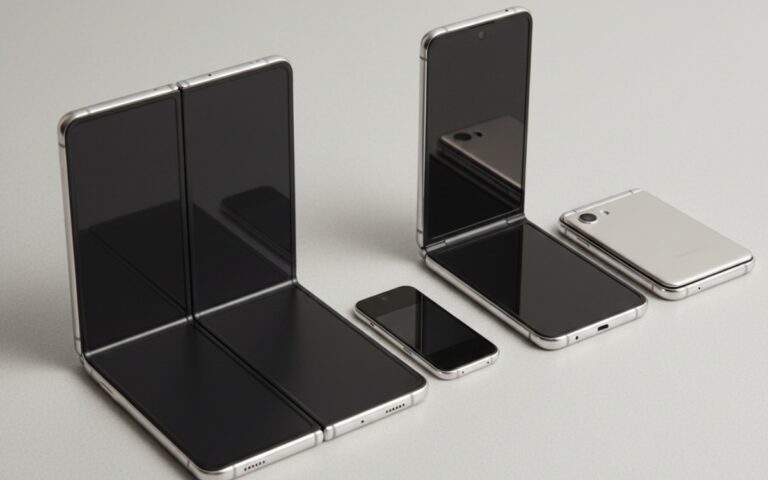
Want to dive deeper into the different types of foldables? Check out foldable smartphones explained for a full breakdown.
Who Should Actually Buy a Foldable?
After two months of real use, here’s my honest take:
Buy a foldable if:
- You’re replacing both a phone and a small tablet
- You do actual productivity work on your phone (emails, documents, coding)
- You’ve got $1,500+ to spend and can afford to replace it if something breaks
- You’re OK being a bit more careful with your device
Stick with traditional if:
- You want maximum durability
- You care about one-handed use
- You want the best camera possible
- You’re on any kind of budget
- You just use your phone for calls, texts, social media, and casual browsing
For most people reading this? Traditional phones are still the move. They’re cheaper, more durable, have better cameras, and just work without thinking about them.
My Actual Recommendation
I returned the Z Fold.
Not because it’s bad (it’s actually really impressive tech), but because I realized I didn’t need it. I wanted the cool factor and the bigger screen, but in daily use, I missed the simplicity of my traditional phone.
The apps I thought I’d use in split-screen? I mostly didn’t. The tablet replacement thing? I still grabbed my iPad for serious reading. The wow factor? Wore off after three weeks.
But I know people who swear by their foldables. My friend who commutes two hours a day loves his Z Fold for reading and watching stuff. Another dev I know uses hers as a portable monitor for her laptop. If you’ve got a specific use case, foldables can be game-changing.
For everyone else, save your money and get a really nice traditional flagship. Maybe grab some great accessories with the difference. You’ll be happier.
And honestly? Give it two more years. Foldables are getting better fast, prices are coming down, and app support is improving. The Z Fold 6 or 7 might be the one that actually makes sense for regular people.
Just not yet.
The Bottom Line
Foldables are cool tech looking for the right audience. Traditional smartphones are refined, reliable, and right for most people. There’s no wrong choice here, just different priorities.
I’ll probably try another foldable in a year or two. For now, I’m back on team traditional, and I’m not missing the crease one bit.
Thinking about other factors in your phone decision? Check out our best smartphones of 2026 roundup or learn about smartphone performance optimization.