Foldable Smartphones Explained: Are They Actually Worth ?
I’ll be honest. When Samsung dropped the first Galaxy Fold back in 2019, I thought it was a gimmick. A $2,000 phone that folded in half? Yeah, no thanks. Fast-forward to last year, and I spent two weeks with a friend’s Z Fold 5. My take? It’s complicated.
Foldable phones aren’t just “regular phones that fold.” They’re a completely different category, and if you’re thinking about dropping flagship money on one, you need to know what you’re actually getting into. Not the marketing hype, the real deal.
This article is part of our comprehensive guide on Smartphones and Mobile Technology. For the full guide on choosing the right phone for your needs, check out the main hub.
What Even Is a Foldable Smartphone?
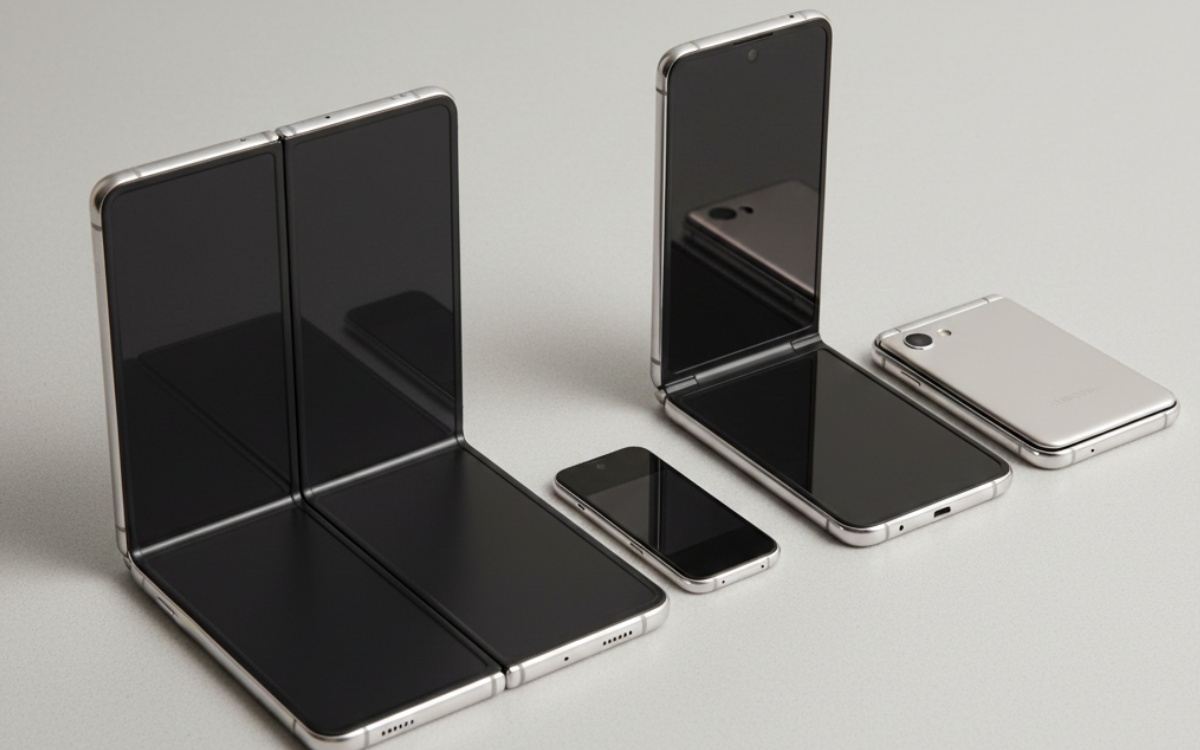
Let’s start basic. A foldable smartphone uses a flexible OLED display that can literally bend without breaking. There are two main types:
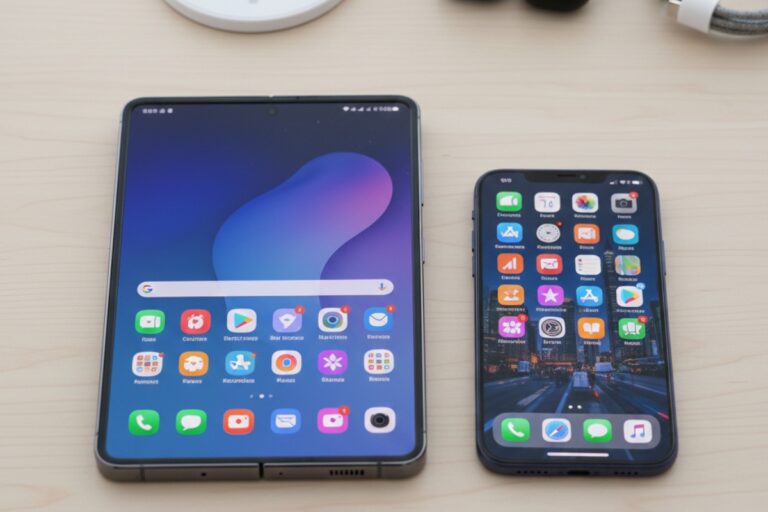
Book-style folds (like Samsung Galaxy Z Fold or Google Pixel Fold) open up like a book, giving you a tablet-sized screen. Closed, they’re thicker than normal phones but still pocketable.
Flip-style folds (like Samsung Z Flip or Motorola Razr) fold vertically, making them compact when closed. Think old-school flip phones but with modern internals.
The tech’s been around for a few years now, but 2024-2025 is when things actually got usable. Early models had screens that broke if you looked at them wrong. I’m not joking. The original Galaxy Fold had a protective layer that looked like a screen protector, and people peeled it off. Screen died instantly.
[Image Placement: After this section]
The Good Stuff Nobody Mentions
Here’s what surprised me about using a foldable for real work:
Multitasking That Actually Works

On my regular phone, “multitasking” means switching between apps constantly. On a foldable? I had Slack, my code editor, and documentation open at the same time. Side by side. No squinting.
If you’re someone who’s constantly juggling apps, this is huge. I could respond to messages while keeping my main task visible. Sounds simple, but it changed how I worked on mobile.
The Novelty Factor (Yes, It Matters)
Look, I’m usually the cynical guy who rolls his eyes at “cool tech.” But pulling out a phone that unfolds into a mini tablet gets reactions. Every. Single. Time.
Is this a reason to buy one? Probably not. But am I lying if I say it doesn’t feel a bit cool? Nope.
Actually Useful Features
The cover screen on book-style foldables isn’t just for show. Quick replies, checking notifications, camera preview – all without opening the device. It’s faster than unlocking a regular phone sometimes.
And flip phones? They’re genuinely compact. I watched someone fit a Z Flip in their front jeans pocket. Try that with an iPhone 15 Pro Max.
Want to know which current phones nail these features? Check out our flagship smartphone reviews for detailed comparisons.
The Problems They Don’t Put in Ads
Alright, real talk time. Foldable phones have issues. Some are dealbreakers depending on what you need.
That Crease in the Middle
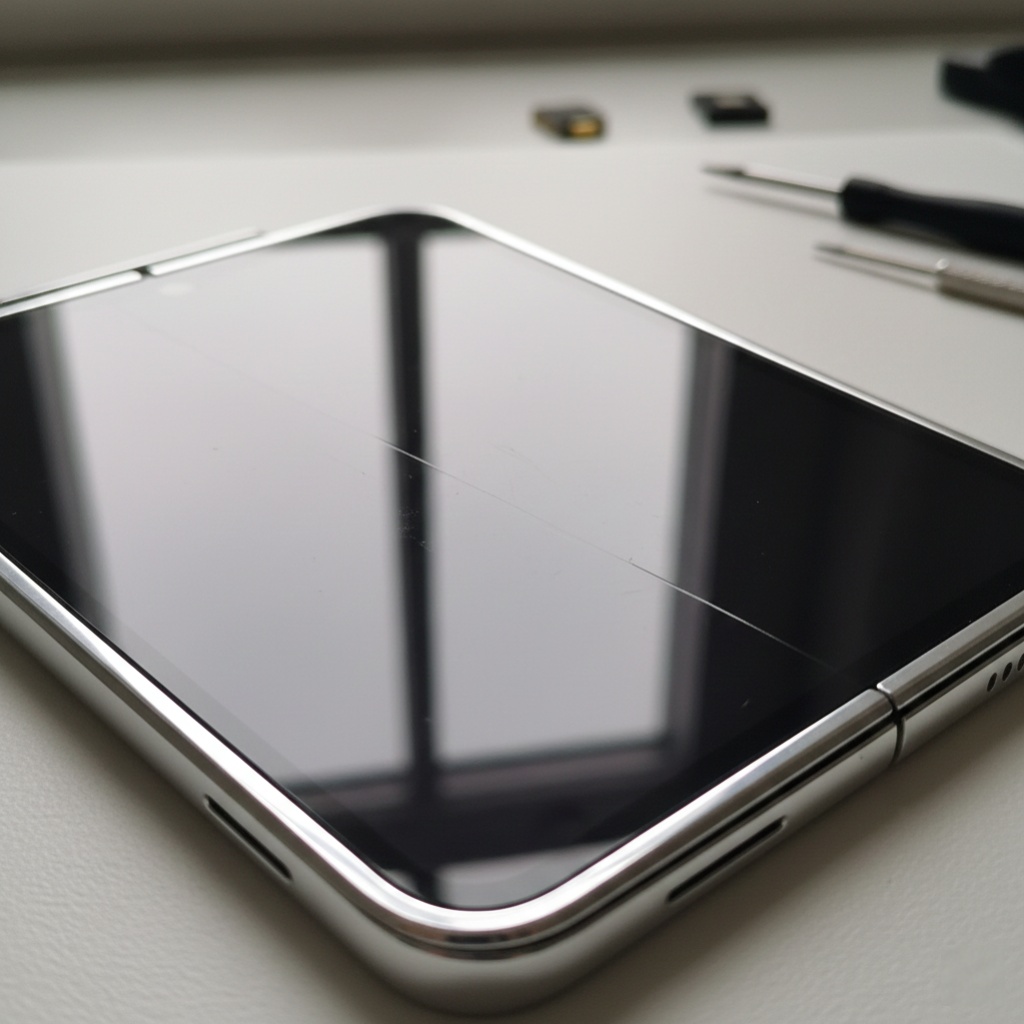
Every foldable has it. The screen creases where it folds. Samsung’s gotten better at hiding it, but in direct sunlight? You’ll see it. You’ll feel it when you swipe across.
Does it bother me? Not as much as I expected. Does it bother some people? Absolutely. You can’t unsee it once you notice it.
Durability Concerns
These things are more fragile than regular phones. Period.
The hinge mechanism has moving parts. The screen is plastic, not glass (it has to flex). Dust and debris can get in there. I’ve seen people baby their foldables like they’re made of paper.
My friend’s Z Fold 5 developed a small dead pixel cluster after 8 months. Could happen to any phone, but feels worse when you paid $1,800.
If you’re worried about longevity, our guide on smartphones with longest software support covers which brands actually stand behind their devices.
Weight and Bulk
Book-style foldables are chunky. The Z Fold 5 weighs 253 grams. That’s nearly 30% heavier than a regular flagship. Closed, it’s almost twice as thick.
You feel it in your pocket. You notice it after holding it for 30 minutes. If you’ve got smaller hands or don’t like heavy phones, this matters.
Battery Life Is… Complicated
Two screens = more battery drain. Sure, manufacturers pack in bigger batteries, but you’re also running that massive unfolded display.
I got through a day with moderate use, but if you’re planning a full workday of heavy multitasking? Bring a charger. Or check out phones with fastest charging technology if battery anxiety is real for you.
App Support Isn’t Perfect
Most apps work fine, but not all of them are optimized for that big unfolded screen. Some just stretch weirdly. Others don’t support split-screen mode properly.
It’s gotten better, but you’ll still run into apps that clearly weren’t designed for this form factor.
[Image Placement: After this section]
Should You Actually Buy One?
Here’s my framework for deciding:
Get a foldable if:
- You actually use your phone for productivity work
- You consume a lot of media (video, reading, gaming)
- You want something different and are okay with trade-offs
- You have the budget and accept the durability risks
Skip it if:
- You want the most durable phone possible
- You prioritize camera quality above all else
- You’re on a budget (seriously, just don’t)
- You want something slim and light
For most people? A regular flagship phone is still the better choice. The best smartphones of 2026 offer better cameras, better battery life, and proven durability for less money.
But if you’re someone who’s constantly frustrated by screen real estate on phones, or you genuinely think you’d use the extra space, foldables are finally at a point where they’re not just expensive experiments.
The Future Looks Interesting
Here’s the thing about foldables: they’re only going to get better. Screens are getting more durable, hinges are getting smoother, and prices are slowly coming down.
We’re seeing tri-fold prototypes. Rollable displays. Crazy stuff that might actually become mainstream in a few years.
Right now? Foldables are for early adopters and people with specific use cases. In 2026? They might be for everyone. Our article on smartphone trends to watch in 2026 covers what’s coming next.
Bottom Line
Foldable smartphones aren’t perfect. They’re heavier, more fragile, and more expensive than traditional phones. But they’re also genuinely useful for certain workflows and offer something different in a sea of rectangular glass slabs.
I wouldn’t recommend one to my parents. But for someone who treats their phone as a work device and values screen space? Yeah, they’re worth considering now.
Just go into it with your eyes open about the trade-offs. And for the love of everything, buy the protection plan.
Want more specific recommendations? Our smartphone buying guide walks through exactly what to look for based on your needs and budget.
Looking for alternatives? Compare foldable vs traditional smartphones to see which form factor actually makes sense for you.